


Trump Claims Iran Deal Near After Calling Off Strikes (Middle East)
Indian Seafarer Deaths Strain US Ties Amid Hormuz Blockade (Conflict)
World Bank Cuts Growth Outlook As War Hits Markets (Markets)
Ukraine Drone Strikes Tighten Crimea Supply Squeeze (Conflict)
UK Defence Funding Row Deepens After Healey Exit (UK)
Meloni Urges Nato Rethink As Italy Lifts Defence Spend (Europe)
Swiss Population Cap Vote Tests Immigration Consensus (Europe)
Canada Moves Toward Under 16 Social Media Ban (Technology)
Super El Niño Raises Risk Of Extreme Weather (Climate)
SpaceX IPO Puts Musk Near Paper Trillionaire Status (Technology)
A succinct daily briefing delivered each weekday to help you stay on top of the stories shaping the world.

President Donald Trump said he had called off new military strikes on Iran and claimed the United States was close to a settlement to wind down the war, saying a memorandum of understanding could be signed within days. He said an agreement to extend the fragile ceasefire that began in April would provide more time for negotiations over Iran’s nuclear programme.
Iran responded more cautiously. Foreign Ministry spokesperson Esmail Baghaei said reports of an agreement were “speculative” and that “nothing has been finalised”, although he said most of the text had been completed. The announcement followed two days of exchanges between the United States and Iran after President Donald Trump had earlier threatened to hit Iran “VERY HARD TONIGHT” and take “total control” of its oil and gas industries.
The Strait of Hormuz and Iran’s nuclear programme remain central issues in the negotiations.
Sources: Associated Press, BBC

India has issued a “strong protest” after three Indian seafarers were killed when US forces struck the Palau-flagged tanker MT Settebello in the Gulf of Oman. US Central Command said it fired two Hellfire missiles at the vessel’s engine room after alleging it was violating the American blockade of Iranian ports and had repeatedly failed to comply with instructions.
The deaths mark the first fatalities since the blockade began in April. India confirmed the bodies of chief engineer Patnala Suresh, deck cadet Aditya Sharma and fitter Shivanand Chaurashiya had been recovered. Indian Shipping minister Sarbananda Sonowal described the deaths as a “profound loss to our maritime family”.
The incident comes as the United States and Iran exchange renewed strikes, testing a fragile ceasefire and complicating efforts to secure a permanent peace agreement while tensions remain high around the Strait of Hormuz.
Sources: The Guardian, The Independent

The World Bank has cut its global growth forecast for 2026 to 2.5%, the weakest since the Covid pandemic, as the war in the Middle East drives up energy prices, inflation and borrowing costs. It said growth could fall to 1.3% if energy disruption worsens and financial market stress deepens.

The bank lowered forecasts for two-thirds of countries, with the biggest cuts affecting the United Arab Emirates, Iraq and other Middle Eastern economies whose energy exports have been hit by the conflict. It said its baseline assumes Brent crude averages $94 this year and global inflation reaches 4%.
World Bank chief economist Indermit Gill said the world economy is “a lot less resilient” than in 2008 or 2018. Developing economies, excluding China and India, face what the report called a “lost decade” of stalled convergence with advanced economies.
Sources: Reuters, The Guardian

Ukraine’s expanding drone campaign against Russian-held Crimea has moved from battlefield attrition into economic disruption, hitting refineries, depots, pipelines and tanker trucks along the land corridor from Russia. The attacks have triggered the peninsula’s worst fuel crisis since Moscow illegally annexed Crimea in 2014, with motorists queuing at gas stations and authorities restricting gasoline to 20 litres per vehicle owner per week.
Robert Brovdi, commander of Ukraine’s Unmanned Systems Forces, said strikes had reduced traffic on the Novorossiya highway, a critical Russian military supply route through occupied southern Ukraine to Crimea, by more than two thirds over the past month. He said Ukraine aimed to gain total control of the road within another month and “isolate Crimea in the near future”.

The disruption threatens Crimea’s tourism-dependent summer season, while Russia’s recent advances have ground to a near halt.
Sources: Reuters, Associated Press

John Healey’s resignation as UK defence secretary has deepened a funding crisis around Britain’s military plans, after he warned Prime Minister Sir Keir Starmer that proposed spending “falls well short” of what is needed to protect the UK. Armed forces minister Al Carns then quit, saying the defence investment plan was “neither transformative enough nor sufficiently funded”.
Dan Jarvis, the security minister and a former British Army officer, has been appointed defence secretary. Sir Keir said he was “proud of our record on funding” and that the plan would provide the resources the military needs to keep Britain safe.
The dispute comes before next month’s Nato summit in Turkey, where Sir Keir had set a public deadline to announce the blueprint. Reports suggested a £13.5bn funding increase, below the £28bn requested by the Ministry of Defence.
Sources: BBC, Bloomberg
Restacking this post will help it reach more readers interested in the world.

Italy will raise defence and security spending to 2.8% of GDP in 2026, Prime Minister Giorgia Meloni said, as she urged Nato allies to rethink military priorities while warfare is transformed by drones, satellites and data. She said the increase of about 0.71 percentage points would be reported at next month’s Nato summit.
Most of the rise will come from domestic security spending, including some police duties, as Italy uses Nato rules to include items previously excluded from its budget. Meloni warned that modern military power could not be measured only by headline spending, traditional weapons or expenditure volumes.
Pointing to Ukraine, she said tanks costing millions of euros had been destroyed by drones costing an average of €20,000. She said the West must debate the value of satellites, tanks, aircraft carriers and data.
Sources: Reuters, ANSA

Swiss voters will decide on Sunday whether to cap the country’s population at 10 million, in a referendum that has exposed divisions over immigration and could put Switzerland on a collision course with the EU. The proposal, led by the right-wing Swiss People’s Party, would apply to a population of about 9.1 million today.
If the population reaches 9.5 million, the government would have to tighten rules on asylum and family reunification. If it reaches 10 million, ministers could be required to end free movement with the EU if other measures proved insufficient.
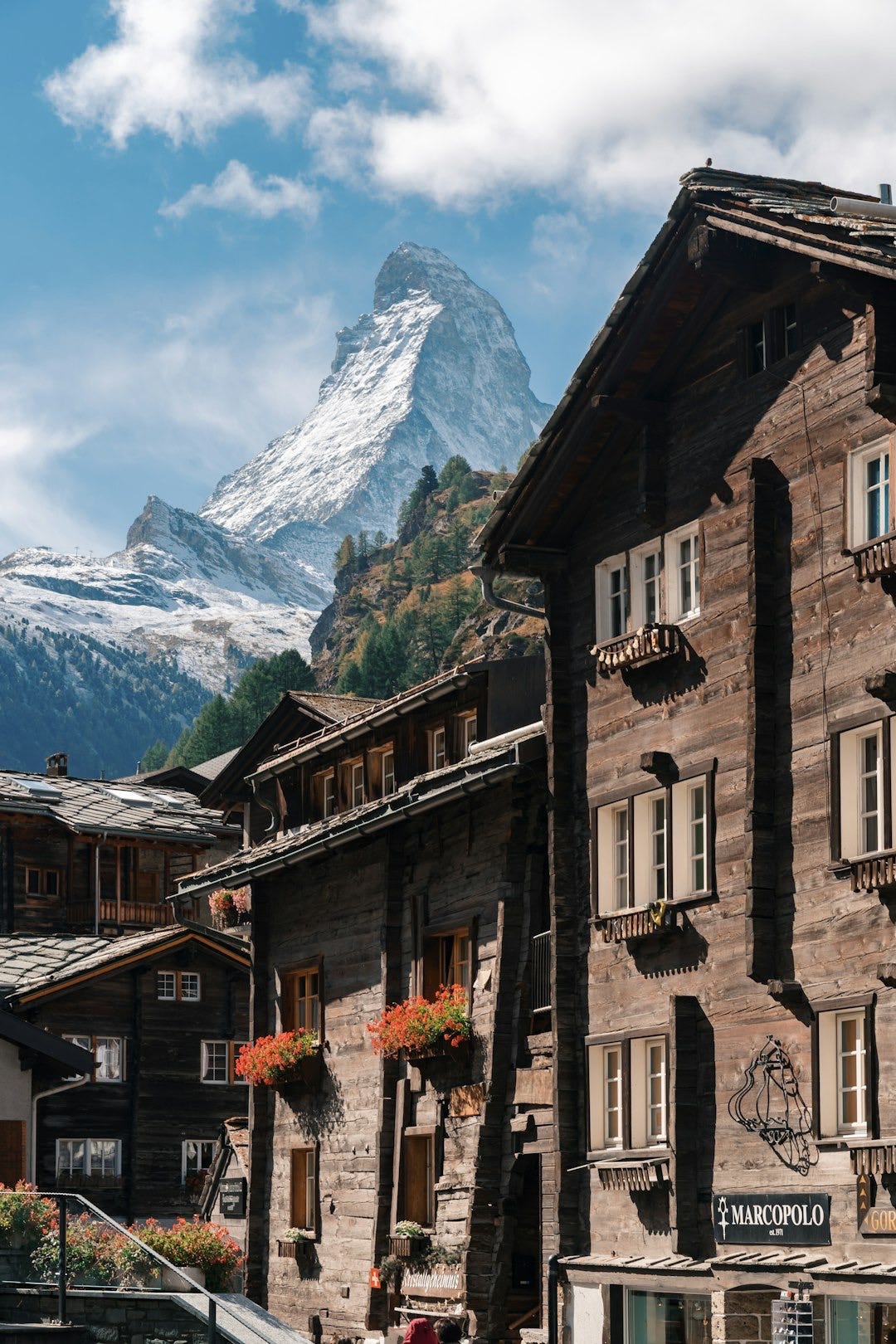
Polling suggests the vote remains close, with opposition edging ahead after earlier support for the proposal peaked at 52%. Critics say the cap would create business uncertainty and risk Switzerland’s EU agreements, while supporters link immigration to housing, infrastructure and quality-of-life concerns.
Sources: FT, Wall Street Journal

Canada has introduced legislation that could ban children younger than 16 from having social media accounts unless companies prove their platforms are safe. The Safe Social Media Act still requires parliamentary approval and would create a digital safety commission to set exemption criteria.
Canadian Culture Minister Marc Miller said platforms would need to prove they are safe and that age verification would be established. He said the law would likely apply to companies including Meta Platforms and Snapchat, though they are not named. Firms that fail to comply could face penalties of up to 3% of global revenue or C$10mn, whichever is greater.
The legislation covers harmful content including self-harm material, incitement to violence, hatred and non-consensual intimate images. It would also regulate artificial intelligence chatbots by requiring companies to act responsibly through measures such as crisis intervention protocols.
Sources: The Guardian, Wall Street Journal

El Niño has officially arrived and could become one of the strongest events in the historical record going back to 1950, US officials at the National Oceanic and Atmospheric Administration (NOAA) said. The climate pattern is forecast to intensify into a very strong or “super” El Niño, with major shifts in global weather and higher temperatures.
NOAA’s Climate Prediction Center said there was a 63% chance of the event becoming very strong and a 100% chance of El Niño continuing through the northern hemisphere fall, with very high odds it continues into winter. Super El Niño events are rare, with recent examples in 2015-16, 1997-98 and 1982-83.
The pattern can fuel heatwaves, flooding and drought, depending on location. It can also raise global average surface temperatures on top of the human-caused warming trend from fossil fuel pollution.
Sources: CNN, The Guardian

SpaceX has priced its initial public offering at $135 a share, raising $75bn in the world’s biggest IPO and valuing the rockets, satellites and AI group among America’s largest listed companies. Trading is due to start on Friday after demand exceeded the shares on offer by more than three times.

The listing lifts the value of Elon Musk’s holdings in SpaceX and Tesla to more than $1.1tn, although that paper status depends partly on shares tied to future goals including space data centres and a human settlement on Mars. Excluding those shares, Musk remains just short of trillionaire status.
SpaceX disclosed $13bn in losses since the beginning of 2023. The company plans to use the IPO capital for projects ranging from AI infrastructure to new satellite constellations, underscoring investor appetite for companies linked to the AI boom.
Sources: Washington Post, FT
Restacking or sharing this publication means more people can read it. Commenting extends the conversation. Liking shows your appreciation.
On this day …
On this day in 1987, President Ronald Reagan stood at Berlin’s Brandenburg Gate and called on Soviet leader Mikhail Gorbachev to “tear down this wall.”
At the time, the Berlin Wall remained one of the most visible symbols of Cold War division between East and West. Although the speech did not immediately change events, it became closely associated with the political transformations that followed across Eastern Europe.
Two years later, the Wall fell, marking the beginning of the end of the Cold War order that had shaped global politics for more than four decades.
Do symbolic moments in history change events themselves, or do they gain meaning because larger changes are already underway?