


NATO Launches Arctic Sentry Mission In Greenland
Russian War Losses Outpace Recruitment In Ukraine
Missile Attack Hits Kyiv And Dnipro
Russia To Observe Nuclear Limits If US Complies
US House Votes To Rescind Trump Canada Tariffs
US House Passes Proof Of Citizenship Voting Bill
Iran Marks Revolution Anniversary Amid Tensions
US Prepares Second Carrier Deployment To Pressure Iran
China Tests Moon Ship And Reusable Rocket Systems
Russia Evacuates Tourists As Cuba Fuel Crisis Deepens

NATO has launched a new mission, “Arctic Sentry,” to strengthen its presence in the Arctic and coordinate allied activity around Greenland. The initiative aims to protect alliance territory and maintain stability in a strategically significant region, initially overseeing existing operations such as exercises by Norway and Denmark. The move follows tensions within the alliance after renewed United States claims on Greenland and efforts to ensure security through joint action by seven Arctic allies.
The mission also reflects political pressures within NATO after Washington backed away from threats to acquire the Danish territory. Diplomats and analysts say the initiative seeks to reassure the United States and preserve alliance unity, with some describing the threat environment as largely unchanged.
The deployment may involve joint exercises, maritime patrols or future command structures, though details of additional military capabilities remain unclear.
Sources: DW, Politico Europe

Russia sustained more battlefield losses in Ukraine than it could replace last month, according to Western officials, signalling pressure on Moscow’s capacity to sustain offensive operations. The shortfall of roughly 9,000 personnel follows heavy casualties and limited territorial progress, with Russian forces unable to achieve significant gains in January despite continued attacks along the 1,200-kilometre front line.
Rising losses complicate efforts to maintain troop levels and could eventually force difficult choices over mobilisation, an option previously avoided after domestic backlash. Officials say Ukraine’s strategy of increasing Russian casualties appears to be having some effect, aided by advances in drone warfare.
Analysts also report slower battlefield progress and mounting operational strain, though the situation remains difficult and Russia retains a larger pool of potential recruits.
Sources: Bloomberg, FT

Ukraine’s capital Kyiv came under a “massive” Russian missile attack early Thursday, with residential and non-residential buildings struck across the city, officials said. Explosions were heard and emergency medical teams were dispatched as fragments fell near two residential buildings, though no casualties were reported.
Air raid alerts remained in force well after midnight as authorities said the assault was still underway. Officials said the attack affected areas on both sides of the Dnipro River and included at least one hit in an eastern suburb. The southeastern city of Dnipro was also targeted, where private homes and cars sustained damage, underscoring continued pressure on major urban areas and infrastructure.
Officials said the strikes extended beyond Kyiv and Dnipro, highlighting the persistence of large-scale attacks against Ukrainian cities during the conflict. The continued targeting of major population centres reflects the scale and intensity of ongoing military operations.
Sources: Reuters, Arab News

Russia will continue observing limits on its nuclear arsenal under the expired New START treaty as long as the United States does the same, Foreign Minister Sergey Lavrov said. The agreement lapsed on February 5, leaving the world’s two largest nuclear powers without binding restrictions on their strategic arsenals for the first time in more than half a century.
Lavrov told lawmakers that a moratorium declared by President Vladimir Putin would remain in force provided Washington does not exceed the treaty’s limits. Moscow believes the United States is not in a hurry to abandon the caps and will monitor developments while remaining open to negotiating a new agreement. Russia has also signalled interest in future arms control talks following discussions between Russian and US negotiators.

The 2010 pact limited each side to 1,550 deployed nuclear warheads and 700 delivery systems, while allowing inspections to verify compliance, though these were suspended during the pandemic.
Sources: Associated Press, Al Jazeera

The US House of Representatives voted to reject President Donald Trump’s tariffs on Canadian goods, delivering a rare rebuke of his trade policy. The measure passed 219-211, with six Republicans joining Democrats, though the move remains largely symbolic because reversing the tariffs would require Senate approval and the president’s signature.
Lawmakers acted after a procedural barrier that had prevented votes on tariff policy expired. Trump issued a warning to Republicans during the vote, threatening political consequences for those opposing the duties. Supporters of the measure argued tariffs raise costs for consumers and harm domestic industries, while others sought to reassert congressional authority over trade decisions.
The tariffs were imposed using emergency economic powers and have affected sectors including autos, steel and aluminium, though exemptions for some goods and existing trade rules have kept most bilateral trade tariff-free.
Sources: Le Monde, CNN

US House Republicans passed the SAVE America Act on Wednesday, voting 218-213 to require proof of US citizenship in the November midterm elections. The bill would impose criminal penalties on election officials who register anyone without the required documentation and adds a photo ID requirement for people voting at the polls or via mail-in ballots in subsequent federal elections.
A version would require proof of citizenship each time a voter casts a ballot in a federal election. It would require states to share voter rolls with the Department of Homeland Security and allow the agency to seize voter rolls. The Brennan Center warned it could deny the vote to millions of citizens who lack access to passports, birth certificates and documents, and noted half of Americans do not have a passport.
The bill goes to the Senate, where it is unlikely to reach the 60 votes needed for passage.
Sources: New York Times, Reuters

Iran marked the 47th anniversary of its 1979 Islamic Revolution on Wednesday with nationwide rallies as the government faced internal unrest and mounting pressure from the United States. State television showed tens of thousands attending pro-government demonstrations, while some protesters reportedly shouted anti-government slogans from residential buildings despite an ongoing crackdown.
President Masoud Pezeshkian used the anniversary to insist Iran would not yield to what he called excessive demands from Washington and maintained the country’s nuclear programme was peaceful and open to verification. His remarks came as US pressure over uranium enrichment continues and indirect talks on the nuclear issue remain uncertain.
The commemorations followed a bloody suppression of nationwide protests last month that killed thousands and saw tens of thousands detained, according to activists. The anniversary reflected a divided public mood as authorities sought to project stability while acknowledging public anger.
Sources: DW, Associated Press

The Pentagon has told a second aircraft carrier strike group to prepare for deployment to the Middle East as Washington increases pressure on Iran over its nuclear program. Officials said the carrier could deploy in about two weeks, though President Donald Trump has not yet issued a formal order and plans could change.
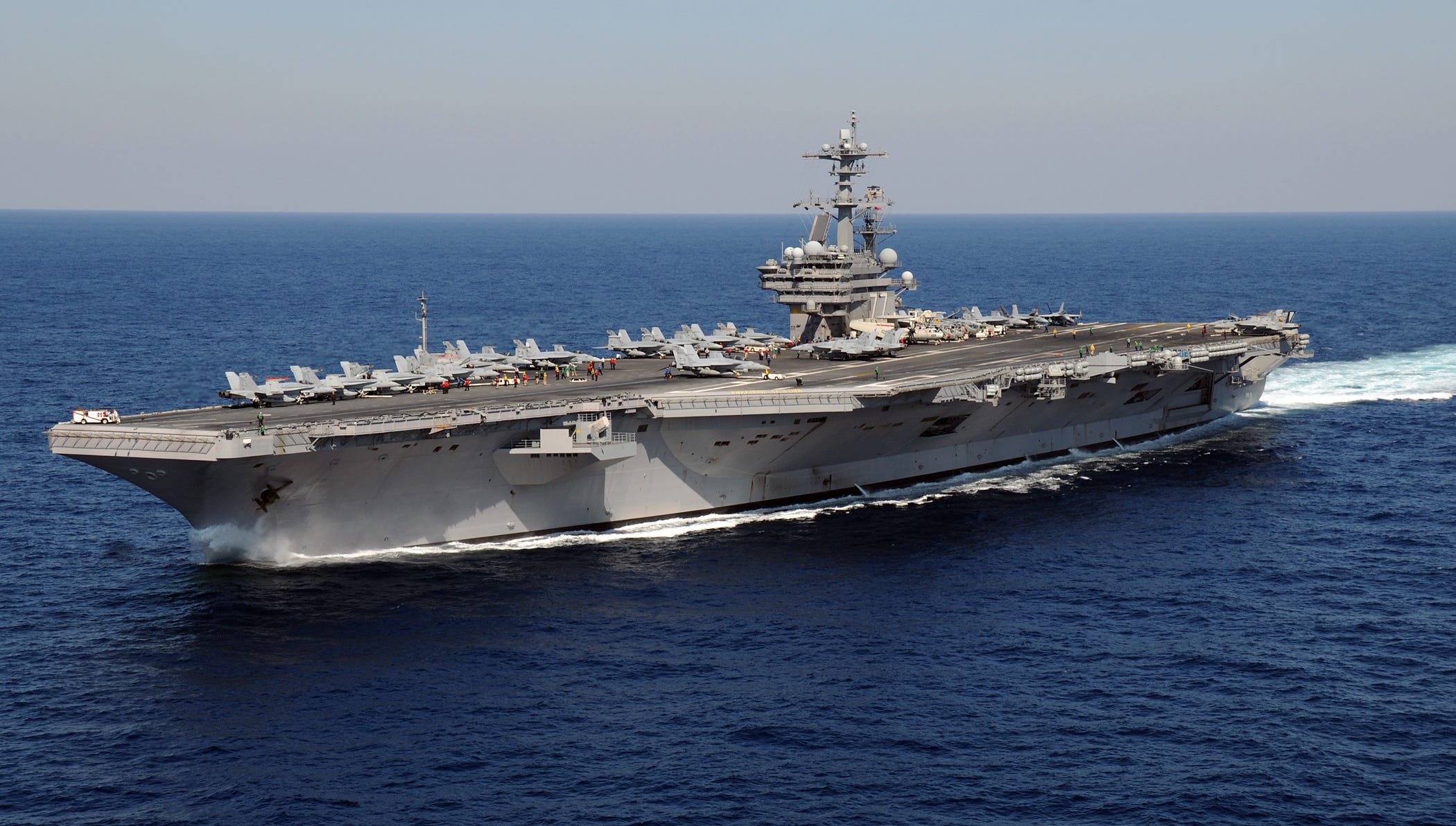
If approved, the vessel would join the USS Abraham Lincoln already in the region, marking the first time two carriers have operated there in nearly a year. The potential deployment follows a recent buildup of U.S. firepower, including additional warships, air defences and fighter squadrons.
Trump said he was weighing military action if negotiations with Iran fail but prefers a deal. U.S. and Iranian officials held indirect talks in Oman, while Trump discussed Iran with Israeli Prime Minister Benjamin Netanyahu. Officials said the order to deploy could be issued within hours.
Sources: Wall Street Journal , CGTN

China has conducted a test flight of a new crew capsule and reusable rocket, marking a key step in its plan to land astronauts on the Moon by 2030. The uncrewed Mengzhou spacecraft launched atop a prototype Long March 10 rocket before activating its escape system at maximum dynamic pressure to simulate an emergency.
The capsule separated from the booster, deployed parachutes and splashed down in the sea, while the rocket’s first stage continued its ascent, reentered the atmosphere and completed a controlled landing. Officials said the test verified safety systems, recovery procedures and reusable rocket technology.
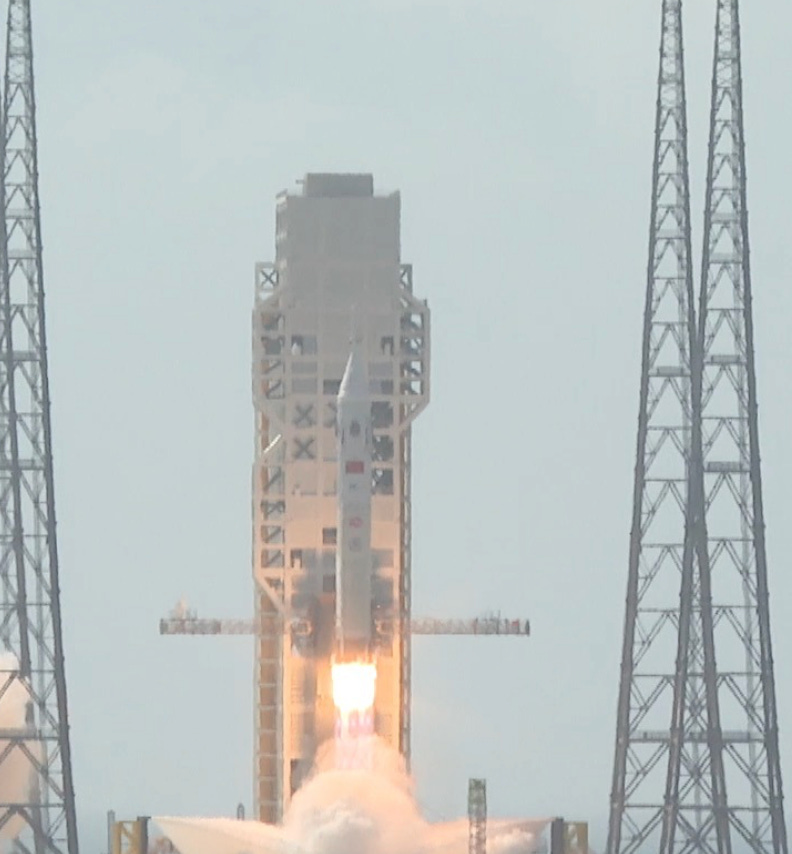
The spacecraft is designed to transport astronauts to lunar orbit and support China’s space station, replacing older crew vehicles. The test forms part of broader preparations for future crewed missions, as China and the United States compete to achieve the next human landing on the Moon.
Sources: Ars Technika, South China Morning Post

Russia has begun evacuating tourists from Cuba after a severe fuel shortage disrupted aviation operations and forced airlines to suspend flights. Authorities said Russian carriers would operate return-only services from Havana and other destinations because refuelling aircraft on the island had become difficult.
The crisis has been driven by a sharp drop in oil supplies, with Cuba warning airlines that jet fuel would remain unavailable for at least a month. Russian officials said thousands of tourists could be affected, while Moscow advised citizens not to travel to the island and prepared humanitarian fuel shipments.
Cuba’s wider energy shortage has triggered power outages, transport cuts and restrictions on public services. The situation reflects intensifying geopolitical tensions, with Moscow accusing Washington of “suffocating” the island through economic pressure, while the United Nations has warned of a potential humanitarian collapse if energy supplies are not restored.
Sources: Al Jazeera, Moscow Times
On this day ….
On this day in 2001, the International Criminal Court formally came into existence following sufficient ratifications of the Rome Statute.
The court was designed to prosecute individuals for genocide, crimes against humanity, and war crimes when national systems are unwilling or unable to act. Its creation marked a significant attempt to place limits on sovereign impunity and to institutionalise accountability at the international level.
While its authority and effectiveness remain contested, the ICC reflects a broader post-Cold War effort to codify global norms around justice, responsibility, and human rights.
Unfortunately represents ambition as much as enforcement as many major countries do not recognise the court.