


Trump Air Force One Ruse Exposes Security Trade-Off (US)
Houthi Attack Widens Maritime Toll (Conflict)
Assad Sentenced To Death In Absentia (Middle East)
Pentagon Reveals 153 Civilians Killed In Yemen Strikes (Conflict)
North Korean Missiles Deepen Russia’s Ukraine Assault (Conflict)
US Pushes Ukraine To Halt Black Sea Tanker Strikes (Geopolitics)
Congo Ebola Outbreak Becomes Fastest-Growing On Record (Africa)
Afghan Girls Mark Five Years Of Secondary School Exclusion (Asia)
Youth Unemployment Rises As Entry-Level Jobs Shrink (World)
Lebanon Becomes First Arab State To Abolish Death Penalty (Middle East)
A succinct daily briefing delivered each weekday to help you stay on top of the stories shaping the world.

As we reported yesterday President Donald Trump was secretly removed from Air Force One in Ankara last month after a credible Iranian threat prompted the operation. The jet then flew to Britain carrying senior officials, government employees, reporters and military personnel, some unaware of the increased threat.
Reporters were told to keep window shades closed as Trump travelled separately on an unmarked military aircraft. He was later returned to Air Force One before disembarking publicly. The White House did not disclose the operation until it was reported this week.
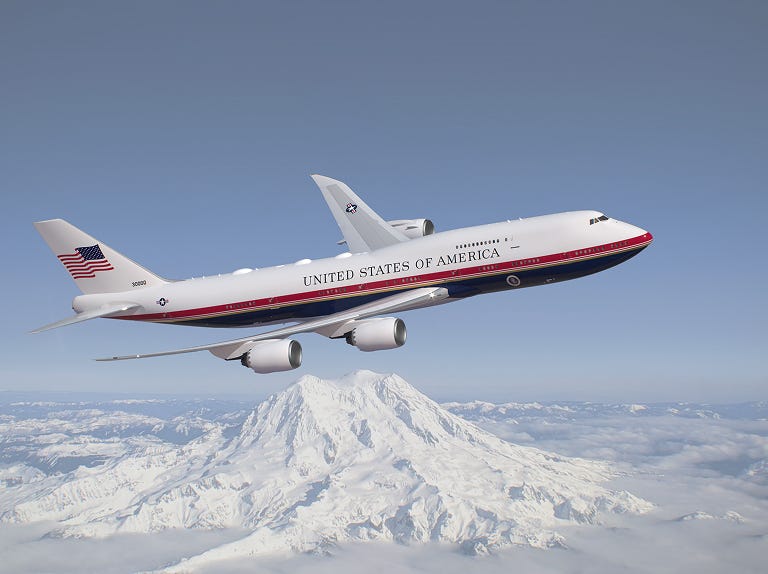
The episode has focused attention on how presidential protection can transfer risk to others. In 2000, President Bill Clinton also switched aircraft for a risky Pakistan visit, but at least one journalist was briefed beforehand and the details were disclosed once he was safe. Current White House Correspondents’ Association president Jacqui Heinrich has since raised concerns about safety and transparency.
The question is being asked whether increasing the safety of the President warrants putting multiple unsuspecting people at risk?
Sources: New York Times, Washington Post

Six people were killed and 10 injured after Yemen’s Iran-backed Houthis struck the cargo ship Tihamah in the Red Sea in what appears to be the group’s first deadly attack on a vessel since the US and Israel began striking Iran on 28 February.
Yemen’s transport ministry said three ballistic missiles hit the ship south of Mocha killing four crew members. Yemen’s coastguard said a second strike killed two rescuers attempting an evacuation. The Houthis said they targeted a vessel carrying Saudi military equipment, while the Yemeni government said Tihamah was carrying food.
The attack widens the maritime toll from a conflict now stretching into its sixth month.
It follows the Houthis’ naval blockade of Saudi ports and comes as shipping through the Strait of Hormuz remains severely disrupted, leaving two critical regional sea lanes exposed to continuing hostilities.
Sources: BBC, CNBC
A Syrian court has sentenced former president Bashar al-Assad and his brother Maher to death in absentia, the first such ruling against the ousted leader since his regime was toppled in 2024. Bashar was convicted of crimes including premeditated murder, murder of children, torture, arbitrary detention and crimes against humanity.
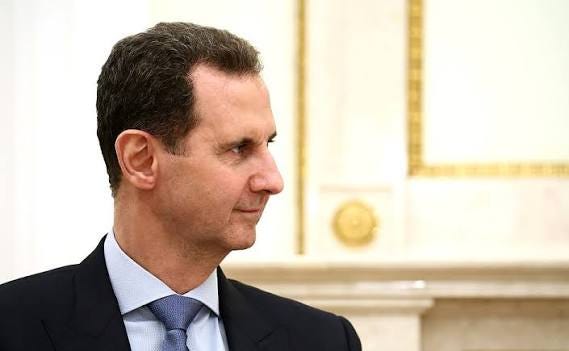
The court also sentenced Assad’s cousin Atef Najib to death. Judge Fakhereddine al-Aryan said Najib was responsible for a deadly crackdown on protesters in Deraa at the start of the 2011 uprising, while Maher headed the army’s Fourth Division.
The verdict is an early test of Syria’s transitional justice process. The country has yet to pass a comprehensive law addressing crimes committed during the civil war, though a newly formed legislature plans to debate one.
A national commission lawyer called the ruling “an important step, not the end of the road”.
Sources: The Guardian, FT
A Pentagon review has found that US military strikes targeting suspected Houthi militants in Yemen last year killed 153 civilians and injured 243 others. The assessment said three attacks in April 2025 “more likely than not” caused civilian harm, while 15 other incidents remain under review.
President Donald Trump authorised the campaign after Houthi attacks on commercial shipping in the Red Sea. The roughly 50-day operation struck at least 1,000 targets and was the first major US military campaign after Defence Secretary Pete Hegseth dismantled a Pentagon office focused on mitigating civilian harm.
The review found 80 civilians were killed at Ras Isa port on 17 April and five at a residence in Sanaa on 6 April.
It also said none of the three cases warranted condolence payments, while human rights groups have described some attacks as potential war crimes.
Sources: Washington Post, The Hill

Ukraine says Russia used North Korean ballistic missiles in a major overnight attack on Zaporizhzhia, as Moscow intensifies strikes while seeking to exploit Kyiv’s shortage of high-end air defences.
President Volodymyr Zelenskyy said the city was hit with North Korean ballistic missiles, Zircon hypersonic weapons and guided aerial bombs. The Zaporizhstal steel plant was struck, forcing production to stop, while workers were hit as they moved towards shelter after an air-raid warning. Russian officials said the plant produced steel used by the Ukrainian military.
Russia has increased ballistic missile attacks in recent months. Six people were also killed overnight in Dnipropetrovsk and Donetsk. Zelenskyy said Moscow is receiving more ballistic projectiles and troops from Pyongyang and warned that the build-up shows Russia is preparing for escalation rather than peace.
Moscow did not immediately confirm whether North Korean missiles were used, and Pyongyang did not comment.
Sources: Al Jazeera, Reuters
Restacking this post will help it reach more readers interested in the world.
Ukraine has halted drone strikes on oil tankers using the Caspian Pipeline Consortium terminal at Russia’s Black Sea port of Novorossiysk after US Vice-President JD Vance asked President Volodymyr Zelenskyy to stop targeting non-Russian vessels and CPC infrastructure.
Kyiv agreed to refrain from attacks provided vessels are not under Ukrainian sanctions and are not carrying Russian oil or other Russian cargo. The CPC is Kazakhstan’s main oil export route, handles about 2 per cent of global crude supplies and is important to European refiners. US energy majors Chevron and ExxonMobil hold stakes in the consortium and Kazakh oilfields supplying it.
The request followed attacks that disrupted loadings, raised shipping and insurance costs and cut CPC flows in July.
Ukraine accepted the US request while seeking a licence to produce Patriot interceptors and hoping to buy several hundred before winter, when Russia is expected to intensify aerial attacks.
Sources: FT, Bloomberg

Congo’s Ebola outbreak has killed 2,011 people from 4,381 confirmed cases, becoming the fastest-growing outbreak on record as conflict, poor roads and disrupted response work complicate efforts to contain it.
The outbreak was declared on 15 May, but sequencing later showed it began in February. It took about nine weeks to reach 1,000 deaths and roughly three more weeks to double. The outbreak has spread across five eastern provinces near South Sudan, Uganda and Rwanda with a case fatality rate of 45.9%.
The rare Bundibugyo strain driving the outbreak has no approved vaccine or treatment, although clinical trials have begun. World Health Organization regional director Dr Mohamed Yakub Janabi said responders were “chasing the virus” while it remained ahead of them. Authorities have restricted public gatherings and closed Ituri’s main airport, but mass movements linked to trade, mining and conflict-driven displacement continue.
Sources: Associated Press, Le Monde
Afghanistan’s ban on girls’ secondary education has now excluded around 2.4 million girls, five years after the Taliban returned to power, according to UNESCO. The figure has risen by about 200,000 since last year and could approach four million by 2030 if the restrictions remain.
Girls have been barred from secondary schools since March 2022 and women from universities since December that year.
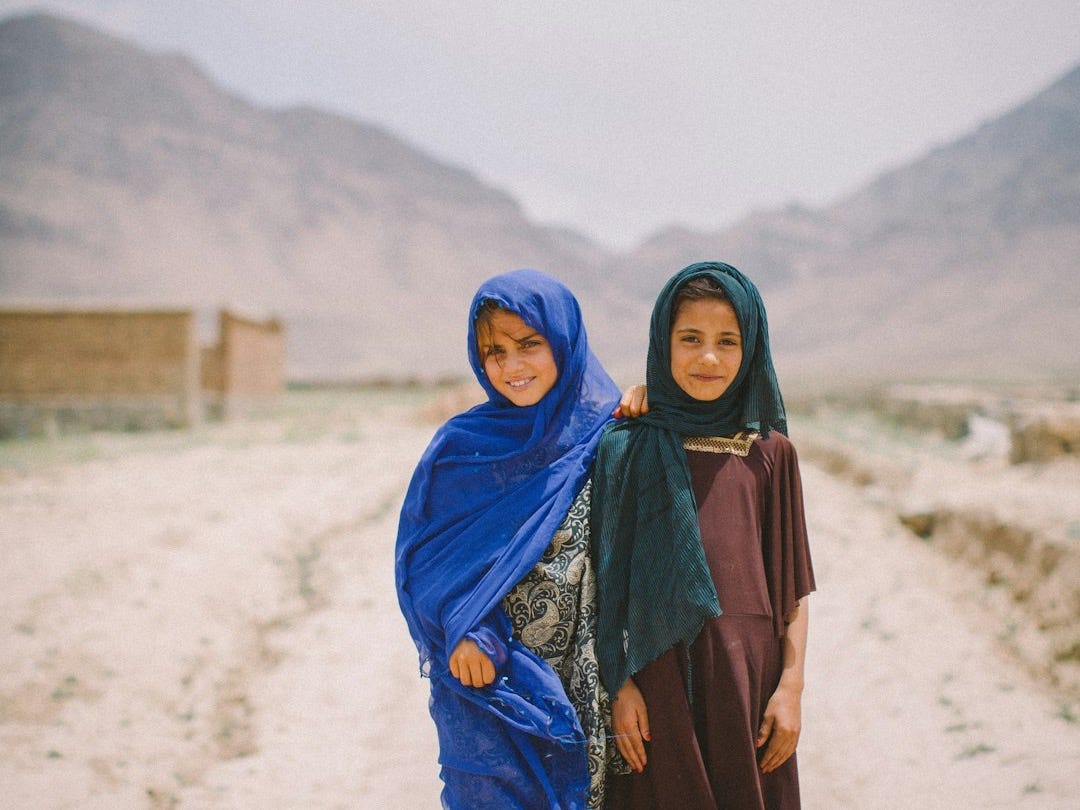
UNESCO says Afghanistan is the only country where girls and women are formally banned from secondary and higher education, reversing two decades of progress that had put nearly one million girls into secondary school by 2021.
The consequences extend beyond classrooms. UNESCO estimates the restrictions could push around 600,000 women out of the workforce by 2066 and cause cumulative income losses of US$9.6 billion. The wider education system is also under strain with more than 90 per cent of 10-year-olds unable to read a simple text.
Sources: South China Morning Post, DW
Global youth unemployment rose to 12.4 per cent in 2025 leaving 67 million people aged 15 to 24 without work, according to the International Labour Organization. The increase reversed part of the post-pandemic improvement, while the share of young people not in employment, education or training edged up to 20 per cent, or 257 million people.
The deterioration was broad as youth unemployment worsened or remained flat in eight of 11 global subregions between 2023 and 2025. The Arab States recorded the highest rate at 26.2 per cent, followed by North Africa at 22.6 per cent, while North America rose from 8.3 to 9.8 per cent.
The ILO cited weaker growth, geopolitical tensions, sluggish job creation and AI-related change among factors making entry-level work harder to secure.
It estimates 6.1 per cent of jobs held by people aged 15 to 29 are in occupations highly exposed to AI-related changes.
Sources: UN, Reuters
Lebanon’s parliament has abolished the death penalty, making the country the first Arab state to formally end capital punishment. The law replaces death sentences with life imprisonment with aggravated hard labour, following more than two decades without an execution.
A majority of the 128-member parliament backed the measure, while Hezbollah’s parliamentary bloc opposed it. Justice Minister Adel Nassar called the vote a “historic step”. Lebanon had observed an unofficial moratorium on executions since January 2004 although courts continued to issue death sentences and 85 people remained under sentence of death at the end of 2025.
The change follows years of campaigning by Lebanese and international human rights groups. Amnesty International regional director Heba Morayef said the decision converted a precarious hiatus in executions into lasting legal protection. Questions remain over how aggravated hard labour will be enforced in Lebanon’s overcrowded, resource-constrained prisons.
Sources: South China Morning Post, Al Jazeera
Restacking or sharing this publication means more people can read it. Commenting extends the conversation. Liking shows your appreciation.
On this day …
On this day in 1949, twelve states adopted the four Geneva Conventions, creating the foundation of the modern international legal framework governing the conduct of war.
Drawn up in the aftermath of the Second World War, the conventions strengthened protections for wounded and sick armed forces, prisoners of war and civilians caught in conflict. The fourth convention was particularly significant, establishing extensive protections for civilians under enemy control or military occupation.
Nearly every state in the world has since become a party to the conventions, making them among the most universally accepted international treaties.
More than seven decades later, their central challenge remains unchanged - how effectively can rules restrain states and armed forces once war has begun?
Thank you. Often there's something in your list I missed reading the news prior to your post, that I find meaningful
Thank you 👍