


Trump Rejects Iran Terms As Truce Frays
Netanyahu Says Iran War Is Not Over
Iranian Nobel Laureate Moved After Prison Health Crisis
Ceasefire Falters As Kyiv And Moscow Trade Blame
Berlin Rejects Putin Mediator Proposal
Latvia Minister Quits After Drone Incursion
Pakistan Attack Exposes Afghan Border Strain
US Cruise Passengers Return For Virus Checks
Starmer Faces Labour Leadership Pressure
One Nation Wins First Lower House Seat
A succinct daily briefing delivered each weekday to help you stay on top of the stories shaping the world.

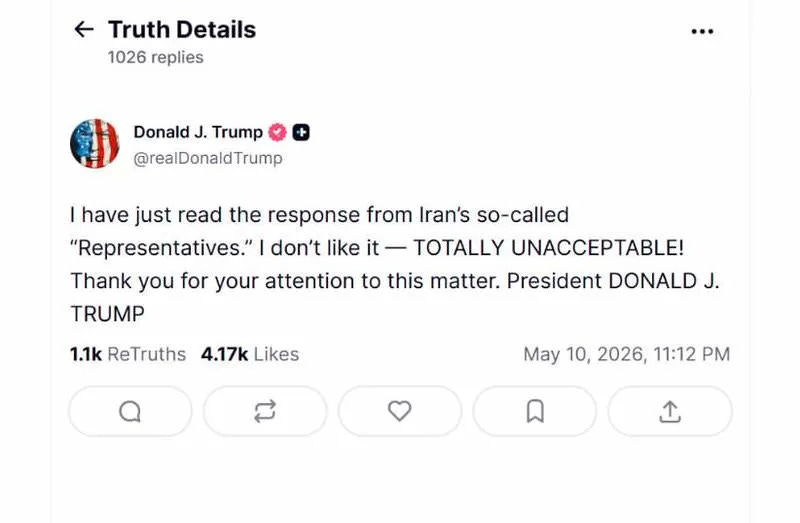
Donald Trump rejected Iran’s response to a US ceasefire proposal as “totally unacceptable”, after Tehran demanded sanctions relief, an end to the US naval blockade and guarantees against renewed attacks. The Iranian response was passed through Pakistani mediators as both sides continued negotiations over reopening the Strait of Hormuz and restricting Iran’s nuclear programme.
The ceasefire meanwhile showed signs of weakening across the Gulf. Drone incidents were reported near Qatar, Kuwait and the United Arab Emirates, while Benjamin Netanyahu warned the conflict could not end while Iran retained highly enriched uranium.
Trump said the US could resume attacks if negotiations failed, while Iranian officials warned their forces remained at “full readiness” to protect uranium sites and respond to threats against commercial shipping. The continuing tensions have disrupted maritime trade routes and prolonged uncertainty around global energy flows.
Sources: Times of India, The Guardian

Benjamin Netanyahu said the war with Iran was “not over” because enriched uranium remained inside the country and enrichment sites still had to be dismantled. He said the best route would be an agreement allowing the material to be taken out, while declining to discuss military options or any timetable.
His remarks exposed a gap with Donald Trump’s public position. Trump said Iran was militarily defeated, that the uranium could be removed “whenever we want”, and that surveillance was sufficient to detect any attempt to reach it.
Netanyahu also said Iran’s missile and proxy networks had been degraded but not eliminated. He called for Israel to reduce US military aid to zero over the next decade, shifting the relationship from aid to partnership, while citing future cooperation in energy, AI and quantum technology.
Sources: France 24, Anadolu Agency

Nobel Peace laureate and activist Narges Mohammadi has been transferred from prison to a Tehran hospital after collapsing twice in custody and suffering what her family described as a critical medical crisis. Her foundation said she was granted a temporary suspension of her sentence on bail so she could receive treatment from her own medical team.
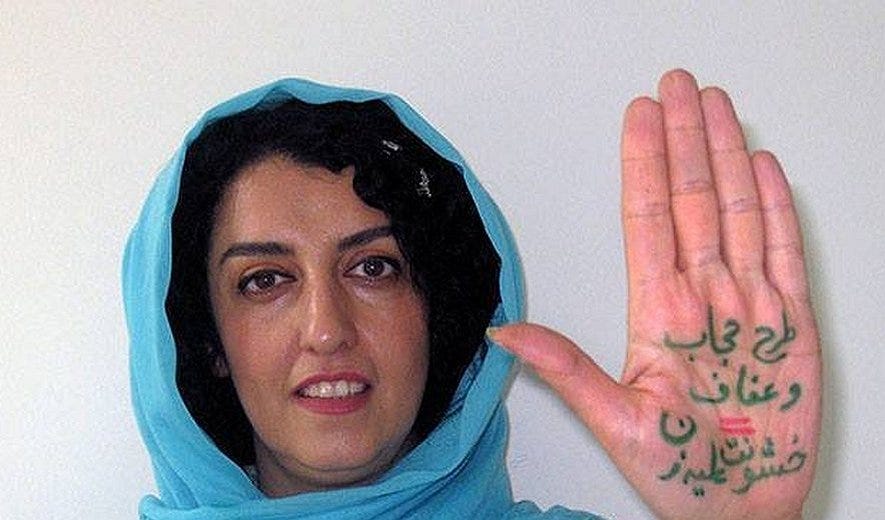
Family members and lawyers said medical examiners had recommended her transfer earlier, but the move was delayed. Mohammadi’s relatives said her condition had deteriorated in prison following a heart attack, blood pressure swings and complications linked to a blood clot in her lung. Amnesty International previously described the denial of specialised medical care as “torture”.
Mohammadi was jailed again in December after criticising Iran’s leadership and later received an additional prison sentence for conspiracy and propaganda-related offences.
Sources: South China Morning Post, DW

Russia and Ukraine accused each other of violating a US-brokered three-day ceasefire, with both sides reporting casualties from drone, artillery and shelling attacks. The truce, confirmed by Donald Trump, was due to run from Saturday to Monday around Russia’s Victory Day commemorations.
Volodymyr Zelenskyy said Russia was not observing the ceasefire and pledged an immediate response if Moscow returned to full-scale warfare. Ukrainian officials reported one person killed in Zaporizhzhia and more wounded across other regions, while Russia’s defence ministry accused Kyiv of more than 1,000 violations and said its forces had “responded in kind”.
Trump said the pause could be the “beginning of the end” of the war and include a prisoner exchange. But Russian presidential aide Yuri Ushakov said Moscow would not move from its demand that Ukrainian forces withdraw from Donbas.
Sources: The Independent, Associated Press

Germany dismissed Vladimir Putin’s suggestion that Gerhard Schroeder could coordinate European Union talks with Russia on a Ukraine peace deal, saying the proposal was not credible while Moscow’s conditions remained unchanged.
A German official said the first test would be whether Russia was willing to extend a three-day ceasefire, and accused Putin of making bogus offers aimed at dividing the Western alliance. A government spokesperson said Berlin saw no sign that Moscow was interested in serious negotiations and said any EU talks would need close coordination with member states and Ukraine.
Schroeder, who served as German chancellor from 1998 to 2005, has faced heavy criticism in Germany for his closeness to Putin and his later work with Russian state-linked energy companies. German political reactions were divided, with some urging caution before ruling out European involvement.
Sources: Reuters, Kyiv Independent
Restacking or sharing this publication means more people can read it. Commenting extends the conversation. Liking shows your appreciation.

Latvian Defence Minister Andris Spruds resigned after two Ukrainian drones entered Latvia from Russia and hit oil storage facilities in the country’s east. Prime Minister Evika Silina had demanded his resignation, saying anti-drone systems had not been deployed fast enough.
Silina appointed army colonel Raivis Melnis as the new defence minister. Latvia and Lithuania had called on NATO to strengthen air defences in the region after the drones crossed the Russian border and exploded at an oil storage facility.
Ukrainian Foreign Minister Andrii Sybiha said the drones were Ukrainian and had been diverted from targets in Russia by Russian electronic warfare. He said Ukraine was willing to work with Baltic states and Finland to prevent such incidents, including through the involvement of Ukrainian specialists. The episode turned a battlefield disruption into a NATO-border security test.
Sources: Reuters, Bloomberg

A suicide attack on a security post in northwest Pakistan killed 14 police officers, after an explosives-laden vehicle was detonated near the post in Bannu, a district bordering Afghanistan. Senior police official Sajjad Khan said several gunmen were involved, triggering a shootout before the building collapsed.
A newly formed militant group, Ittehad-ul-Mujahideen Pakistan, claimed responsibility. The group says it was formed by splinter factions of Tehrik-e-Taliban Pakistan, while authorities accuse it of being a front for the TTP. Security forces have launched an operation to track down the perpetrators.
President Asif Ali Zardari condemned the attack and said militants were operating from sanctuaries in Afghanistan, a claim Kabul denies. The attack follows months of strained relations, cross-border fighting and China-mediated talks that have not stopped sporadic clashes.
Sources: South China Morning Post, Washington Post

Seventeen US cruise passengers are returning for medical monitoring after weeks aboard the M/V Hondius, the ship at the centre of a hantavirus outbreak that has caused at least eight cases and three deaths. One passenger has tested mildly positive and another has mild symptoms.
The passengers disembarked in the Canary Islands and boarded a US government medical repatriation flight to Nebraska. The two potentially affected passengers travelled in biocontainment units, while most of the group will be assessed at a federally funded quarantine unit. Officials said passengers would be monitored for several more weeks, though not formally quarantined.
The World Health Organization recommended 42 days of quarantine and active follow-up after landing, but countries are applying different rules. Officials stressed the public health risk is low because the virus is not highly contagious between people.
Sources: NPR, The Guardian

Keir Starmer will promise bolder action after heavy election losses left him facing growing calls from Labour MPs to resign. The prime minister has rejected demands to quit and suggested he could stay in power for 10 years, while preparing a speech arguing that incremental change will not meet Britain’s challenges.
Labour MP Catherine West said she could try to trigger a leadership contest if Starmer’s speech fails to satisfy her, although Labour rules require the backing of 81 MPs. MP Angela Rayner warned the party was on its “last chance” and backed Andy Burnham’s return to Parliament. Mr Burnham has previously served as an MP and is currently the Mayor of Greater Manchester.
Labour lost almost 1,500 councillors, was removed from power in Wales and recorded its worst Holyrood result. Starmer is expected to put closer ties with Europe at the centre of his proposed reset, citing growth, defence, energy and trade.
Sources: New York Times, BBC

Australia’s right-wing populist One Nation party won its first lower house seat after farmer David Farley took the rural seat of Farrer in a by-election. The result does not affect Anthony Albanese’s majority because the seat was previously held by the conservative Liberal Party, and Labor did not run a candidate.
The win is still a significant advance for One Nation, which already has four Senate seats and is polling ahead of the mainstream conservative coalition in national surveys. One Nation’s leader Pauline Hanson said the party would fight to lower the cost of living, end net zero and stop mass migration.

The result also exposed pressure on Australia’s traditional conservative parties. Farrer had always been held by either the Liberal or National parties, while the coalition has struggled with infighting and poor polling after its worst federal election defeat last year.
Sources: BBC, Reuters
Restacking this post will help it reach more readers interested in the world.
On this day …
On this day in 1998, India carried out a series of underground nuclear tests at Pokhran, formally declaring itself a nuclear weapons state. The tests ended years of strategic ambiguity and forced a rapid reassessment of the global nuclear order, particularly in Asia.
Within weeks, Pakistan responded with its own tests, openly creating a new nuclear rivalry on the subcontinent.
The move also weakened the idea that the world’s nuclear club could remain permanently restricted to a handful of established powers. More broadly, it marked a shift toward a more fragmented global security landscape in which regional powers increasingly sought strategic autonomy outside the structures built during the Cold War.
More than two decades later, the consequences of that decision continue to shape Asian geopolitics and global nuclear diplomacy. Did the tests ultimately create deterrence stability or accelerate long-term proliferation pressures?