


US Strikes Iranian Mine Boats Near Hormuz Chokepoint
US Navy Rejects Hormuz Escort Requests For Now
IEA Weighs Record Oil Reserve Release
US Regrets Snubbing Ukraine Drone Offer
US Says 140 Troops Wounded In Iran War
EU Warns Iran War Is Boosting Russia
Iran Official Threatens Trump As War Escalates
Lebanon Displacement Nears 700,000
EU Reopens Nuclear Debate With SMR Push
UN Says Child Transfers By Russia Are Crimes

The United States military said it destroyed 16 Iranian mine-laying vessels near the Strait of Hormuz after intelligence reports indicated Tehran had begun deploying naval mines in the strategic waterway. Iranian small craft capable of carrying two to three mines each were detected moving into the strait as tensions escalated during the ongoing US-Israeli conflict with Iran.
The narrow shipping corridor carries about one-fifth of the world’s oil exports and traffic has slowed sharply amid fears of drones, missiles and mines. Oil shipments from the Middle East have already been blocked for 11 days, triggering sharp market volatility and rerouting of tankers.
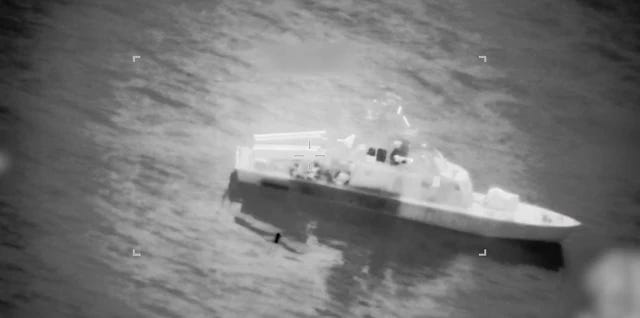
Washington warned that any attempt to obstruct the flow of oil through the strait would provoke severe retaliation, while Iranian officials said US naval movements could be targeted by missiles and drones. With hundreds of vessels waiting outside the chokepoint, the confrontation has placed a critical artery of global energy supply at the centre of the widening conflict.
Sources: The Guardian, NDT

The US Navy has refused virtually constant requests from the shipping industry for military escorts through the Strait of Hormuz since the start of the war on Iran, saying the risk of attack remains too high. The stance leaves a widening gap between political promises to protect shipping and the military assessment on the water.
Traffic through the strait has all but halted, with hundreds of ships anchored, after threats to fire on vessels and fears of mines, drones and missile attacks. More than one-fifth of the world’s oil moves through the route, and the disruption has sent oil prices sharply higher.
The White House also denied that any tanker had already been escorted after a social media claim by the US energy secretary was deleted. The chairman of the Joint Chiefs said the military is still examining options if ordered to escort vessels.
Sources: Reuters, Al Jazeera

The International Energy Agency has proposed the largest release of strategic oil reserves in its history as governments try to contain the market shock from the war on Iran. The plan would exceed the 182 million barrels released in 2022 after Russia’s full-scale invasion of Ukraine, and member countries were due to decide on Wednesday.
The proposal responds to severe disruption in the Strait of Hormuz, where shipments have slowed to a near standstill as fears of attacks on tankers have choked a route that carries roughly one-fifth of the world’s oil supply. Since strikes on Iran began on February 28, oil prices have risen as much as 40 percent and briefly moved above $100 before falling back.
The agency is attempting to use emergency stocks to steady markets before higher crude and fuel prices feed further into inflation, consumer pressure and wider financial instability.
Sources: Bloomberg, Wall Street Journal

US officials have acknowledged a major prewar misstep after dismissing a Ukrainian offer to help counter Iranian Shahed drones, only to reverse course once the conflict exposed the scale of the threat. The proposal, made at a White House meeting last August, included battle-tested interceptor technology and a warning that Iranian one-way attack drones could become a serious danger across the Middle East.
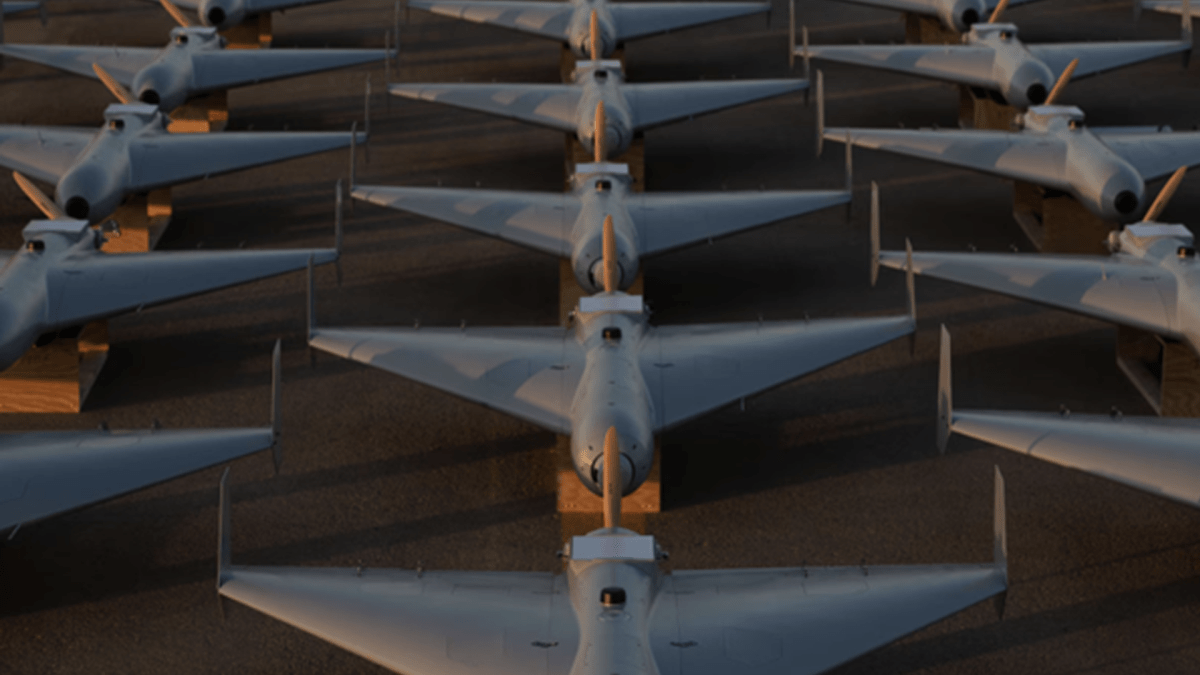
The offer was not taken forward, and officials now say that decision ranks among the administration’s biggest tactical errors since the war began on February 28. Iranian Shahed drones have since been linked to the deaths of seven US service members and have proved harder than expected to stop.
Washington has now sought help from Kyiv, while also moving to deploy its own counter-drone systems. The episode underlines how battlefield experience developed in one war can become immediately relevant in another.
Sources: The Independent, Axios

The Pentagon said about 140 US service members have been wounded in the war with Iran, including eight who remain severely injured and are receiving the highest level of medical care. The disclosure came after days in which only the number of seriously wounded had been publicly detailed.
Iranian strikes have also killed seven American troops. Of the 140 wounded, 108 have already returned to duty, with the Pentagon saying the vast majority of injuries have been minor. The updated toll points to a broader human cost from sustained attacks on US positions since the conflict began on February 28.
The latest confirmed death was Army Sgt. Benjamin Pennington, who was seriously injured on March 1 when Iran struck a Saudi military base where American troops were stationed. He died on Saturday night while officials were preparing to transfer him to a US military hospital in Germany for more advanced care.
Sources: New York Times, Reuters

European Council President António Costa said Russia is the only clear beneficiary of the US-Israeli war on Iran, arguing that higher energy prices and shifting political attention are strengthening Moscow’s position. He said the conflict is generating new resources for Russia’s war effort in Ukraine while drawing military capacity and diplomatic focus away from the Ukrainian front.
The warning comes as oil and gas flows through the Strait of Hormuz have slowed sharply, pushing prices higher and renewing concern over the wider economic impact of the conflict. Costa said the war threatens not only the Middle East but also Europe and the broader international order, and urged all sides to return to negotiations.
The remarks also landed as Russia signalled readiness to resume long-term energy cooperation with Europe and as reports suggested Washington was considering steps that could ease pressure on Russian oil sales.
Sources: Al Jazeera, NBC News

A senior Iranian security official issued a direct threat against Donald Trump after the US president warned of massive retaliation if Iran blocked oil shipments through the Strait of Hormuz. Ali Larijani said Iran did not fear Trump’s threats and warned him to watch out for himself, escalating the rhetoric around a conflict already spreading across the region.
Larijani’s warning came after Trump said the United States would hit Iran twenty times harder if it did anything to stop the flow of oil through the strait. He also said the US would strike targets that would make it virtually impossible for Iran to be built back as a nation.
The exchange underlines how the war is deepening not only through military action but through explicit personal threats between senior figures, with the confrontation continuing to drive wider instability and higher oil prices.
Sources: Politico Europe, Time

Nearly 700,000 people have been displaced in Lebanon as Israeli evacuation orders and a widening bombing campaign against Hezbollah deepen the humanitarian fallout from the regional war. United Nations agencies said more than 667,000 people had registered as displaced, while officials warned the true total was likely higher because many families fled without registering.
The fighting intensified after Hezbollah fired rockets and drones at Israel last week, prompting heavy Israeli bombardment across southern Lebanon and parts of Beirut. United Nations agencies said 84 children had been killed, while the World Health Organization reported 486 people killed and 1,313 injured overall.
The scale of displacement is straining a country still recovering from its previous war, with tens of thousands sheltering in schools and public buildings while others sleep in cars and on pavements. Hospitals and frontline responders are also under severe pressure as the conflict turns Lebanon into a major new front in the wider Middle East war.
Sources: New York Times, Reuters

The European Commission has reopened the bloc’s nuclear debate by backing small modular reactors and framing Europe’s retreat from nuclear power as a strategic mistake. Commission President Ursula von der Leyen said Europe had turned away from a reliable, affordable source of low-emissions power, as nuclear’s share of European electricity fell from one-third in 1990 to close to 15 percent today.

The Commission wants small modular reactors operating in Europe by the early 2030s and has announced a €200 million guarantee to support private investment, using funds from the bloc’s emissions trading system. The strategy is designed to strengthen low-carbon power supply, support heavy industry and stabilise grids when wind and solar cannot meet demand.
The shift comes as higher oil and gas prices during the Iran conflict have renewed concern over Europe’s exposure to global energy volatility, while opposition remains strong in countries that see nuclear power as costly, risky or outdated.
Sources: Bloomberg, Euronews

A United Nations inquiry has concluded that Russia’s deportation and forcible transfer of Ukrainian children amount to crimes against humanity and war crimes, with Vladimir Putin’s involvement described as visible from the outset. The report said at least 1,205 children were transferred or deported to Russia or Russian-occupied parts of Ukraine, and that 80 percent had not been returned.
The inquiry said the removals were not temporary evacuations for safety, as Moscow has claimed, but part of a coordinated state policy prepared even before the full-scale invasion. Many children were placed with families or in institutions, given Russian citizenship and kept from parents or guardians who often did not know where they were.
The findings sharpen international pressure over one of the war’s most sensitive issues, as the return of Ukrainian children remains a central concern in talks linked to repatriation and wider negotiations.
Sources: BBC, The Times
On this day …
On this day in 1985, Mikhail Gorbachev was selected as General Secretary of the Communist Party of the Soviet Union, becoming the country’s youngest leader in decades.
Facing economic stagnation and political rigidity, he introduced reforms known as perestroika (economic restructuring) and glasnost (greater openness).
These policies were intended to modernise the Soviet system but instead unleashed political pressures that weakened central control across Eastern Europe and within the USSR itself.
Within six years the Soviet Union would collapse, ending the Cold War order that had shaped global politics since 1945.
Few leadership transitions in the twentieth century carried such far-reaching consequences for the international system.