


US-Iran Strikes Test Fragile Ceasefire (Conflict)
Trump Says US Escorted Oil Through Hormuz (Middle East)
US Inflation Hits Three-Year High (Economy)
Amnesty Accuses Israel Of West Bank Ethnic Cleansing (Middle East)
UN Warns Cuba Sanctions Are Endangering Lives (Society)
Hegseth Warns Cuba Over Weapons Purchases (Geopolitics)
Americans Fear AI Job Losses (USA)
Musk Accused Of Inflaming Belfast Violence (UK)
US Sanctions China Links To Iran Weapons (Geopolitics)
Extreme Rain Kills Rare Orangutans (Environment)
A succinct daily briefing delivered each weekday to help you stay on top of the stories shaping the world.

The United States and Iran exchanged a fresh round of strikes as President Donald Trump sought to pressure Tehran into an agreement that would extend the April ceasefire, reopen the Strait of Hormuz and advance talks on Iran’s nuclear programme. US Central Command said it had targeted Iranian military surveillance capabilities, communication systems and air defence sites across Iran, while Iranian forces announced retaliatory attacks against US military targets in Kuwait and Bahrain.
The escalation intensified uncertainty around the Strait of Hormuz. Iranian military authorities warned vessels would be targeted if they attempted to cross, while US officials maintained that commercial shipping continued to transit the waterway. Brent crude rose 1.7 per cent to $94.68 a barrel as traders reacted to the risk of wider conflict.
Qatar continued mediation efforts in Tehran, but negotiations remained deadlocked as both sides combined diplomatic messaging with military pressure.
Sources: FT, Reuters

US President Donald Trump said the US military had secretly supported tankers and commercial ships through the Strait of Hormuz, defying Iran’s blockade and moving more than 100 million barrels of oil. He said the mission had helped hold oil prices at $85-$90 a barrel instead of $250, but produced no evidence and gave few operational details.
Maritime monitors have recorded continued movements through the strait, though figures vary and many ships reportedly turned off transponders, making traffic difficult to verify. Maritime intelligence company Windward observed more than 80 crossings in five weeks, while trade tracking company Kpler recorded 264 ships exiting the Persian Gulf between the ceasefire and early June.
The reported flows remain far below pre-war levels, when more than 100 commercial vessels crossed daily. US Energy Secretary Chris Wright said the increased shipments reflected military support, and that the vessels were not Iranian.
Sources: Reuters, ABC

US inflation rose at its fastest rate in three years in May, driven largely by energy costs linked to the US-Israel war in Iran. Bureau of Labor Statistics figures showed prices were 4.2 per cent higher than a year earlier, up from 3.8 per cent in April and 2.4 per cent before the conflict began.
US President Donald Trump said he “loves the inflation” and argued the figures were “great”, while promising prices would fall when the Iran war ended. He said US forces had taken “millions of barrels” of oil from Iran, a claim one source said was not independently verified.
Energy bills were almost a quarter higher than a year earlier, while regular petrol averaged $4.15 a gallon. The figures increase pressure on Federal Reserve chair Kevin Warsh before next week’s rate decision, with economists split over whether rates will rise.
Sources: BBC, The Guardian

Amnesty International accused Israel of carrying out a campaign of “ethnic cleansing” in the occupied West Bank, alleging that the forced displacement of Palestinians results from a concerted state policy aimed at annexing territory. The organisation’s 149-page report argues that displacement is driven not only by settler activity but also by government support and policy decisions.
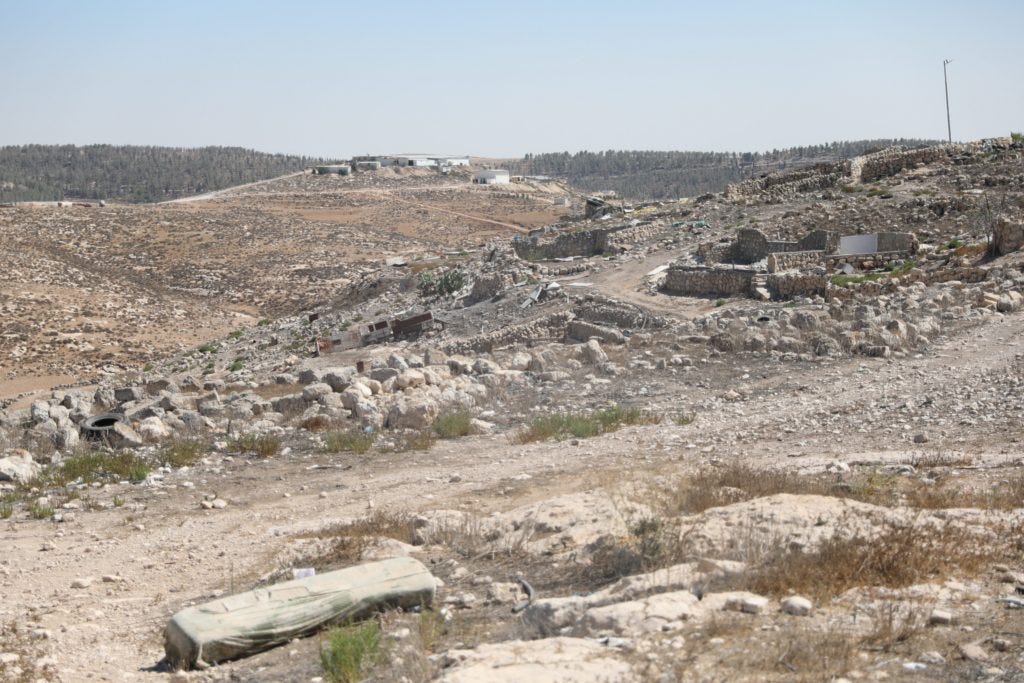
According to United Nations data cited in the report, more than 100 West Bank villages were fully or partially emptied between January 2023 and April 2026. The report also states that approximately 5,910 people were forced to leave predominantly Bedouin and herding communities during that period. Amnesty International Secretary General Agnès Callamard said settler violence was a “state-sanctioned campaign”.
Israel has previously rejected similar allegations as biased. Prime Minister Benjamin Netanyahu’s coalition includes settler leaders and supporters, while key ministers have advocated annexation measures in the territory.
Sources: Associated Press, Amnesty

The Trump administration defended its sanctions on Cuba after United Nations High Commissioner for Human Rights Volker Türk warned that US measures were causing widespread harm and endangering lives. Washington said the sanctions target leaders and entities that sustain the Cuban government, while maintaining that a new relationship with Havana remains possible.
Türk said fuel restrictions imposed since early 2026 and additional sanctions introduced in May were harming access to water, food and healthcare. He said children were dying because doctors lacked essential medical supplies and medicines, and described the measures as incompatible with basic principles of international human rights law.
The United Nations said infant mortality had doubled to 9.9 per 1,000 births, childhood cancer survival rates had fallen from 85 per cent to 65 per cent, and essential medicines were available at around 30 per cent of normal levels. Cuba says the US energy blockade has worsened the crisis.
Sources: Reuters, UN
Restacking this post will help it reach more readers interested in the world.

US Defence Secretary Pete Hegseth warned Cuba against acquiring weapons that could threaten the United States during a visit to the US military base at Guantánamo Bay. He said it would be “unwise” for Havana to seek weapons able to reach the base or the American homeland, warning that Cuba would invite a confrontation it could not withstand.
The comments came as President Donald Trump’s administration increases pressure on Cuba through sanctions and an oil blockade. Reports have said Cuba obtained more than 300 military drones, while Havana has rejected the claims as baseless and accused Washington of fabricating pretexts for potential aggression.
Hegseth said the US sought a positive relationship with Cuba, but did not rule out military action. His visit followed recent trips by senior US officials to Guantánamo and Havana, amid rising tension between the two countries.
Sources: The Guardian, Al Jazeera

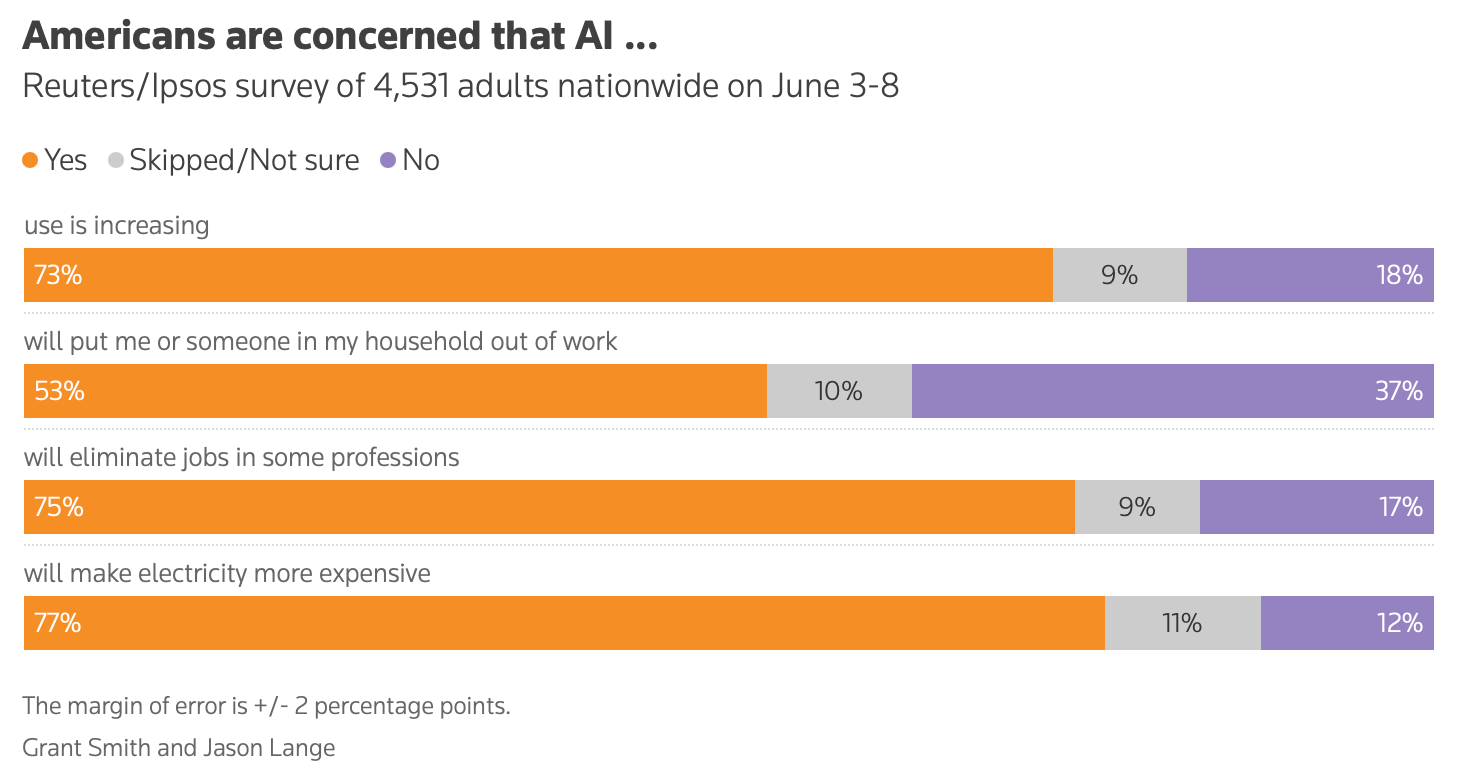
A Reuters/Ipsos poll found that 53 per cent of Americans fear artificial intelligence could put them or someone in their household out of work, reflecting broad unease over the technology’s spread. The six-day survey of 4,531 adults was completed on Monday and had a margin of error of 2 percentage points.
Concern was spread fairly evenly across age, gender and education groups, but was higher among Democrats than Republicans. Some 61 per cent of Democrats said they were worried, compared with 47 per cent of Republicans, while 37 per cent of all respondents said they had no such concern.
The poll followed a wave of AI-related job cuts, including Intuit’s plan to lay off 17 per cent of its global workforce. A separate estimate said AI accounted for more than 38,500 announced US job cuts last month, or 40 per cent of all cuts.
Sources: Reuters, The Hill

Elon Musk was accused of inflaming tensions after violent disorder followed a knife attack in Belfast, where protesters set fire to vehicles and homes and people were targeted based on race. Hadi Alodid, a 30-year-old Sudanese man, was remanded in custody after being charged with attempted murder over the attack, in which Stephen Ogilvie lost his left eye.
Prime Minister Keir Starmer said there was no justification for the violence or for those who encouraged it online. Labour Party chairwoman Anna Turley said social media was playing a role in driving unrest and suggested Musk was among bad-faith actors stoking tensions.
Musk rejected blame, arguing immigration policy was inflaming tensions rather than social media. Ministers plan changes to the Online Safety Act requiring faster removal of illegal content during crises, though they will not take effect until mid-July at the earliest.
Sources: South China Morning Post, The Guardian

The United States imposed sanctions on 11 people and entities accused of supporting weapons procurement by Iran’s Islamic Revolutionary Guard Corps and military, including several based in China and Hong Kong. The Treasury Department said nine designated individuals and companies had facilitated weapons procurement or operated within Iran’s clandestine banking network.
US Treasury Secretary Scott Bessent said the measures were part of Economic Fury, which aims to disrupt foreign procurement networks supporting Iran’s military. The Treasury said the action follows May designations targeting procurement networks that sourced weapons for the IRGC and Iran’s Center for Innovation and Technology Cooperation.
The State Department also imposed sanctions on two entities and two individuals based in Iran and Belarus over Iran’s conventional arms-related activities. The measures block US-linked property of those designated and may expose foreign financial institutions to secondary sanctions for certain transactions.
Sources: Reuters, US Treasury Dept.

Four days of extreme rain and landslides in Sumatra killed an estimated 58 critically endangered Tapanuli orangutans, about 7 per cent of the species, according to a new study. Fewer than 800 of the great apes remain, and previous research suggests annual population losses above 1 per cent could eventually drive the species to extinction.
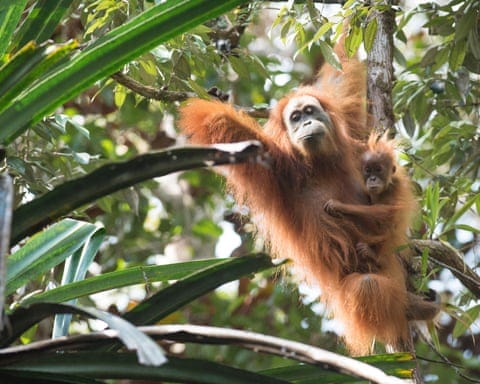
Cyclone Senyar hit Sumatra in November 2025, causing landslides that researchers say destroyed about 8,300 hectares, or 11.7 per cent, of key forest habitat in the Batang Toru ecosystem. The study said human-induced climate change increased rainfall intensity by up to 50 per cent, while mining, palm oil plantations and a hydropower project already threaten the area.
The Indonesian government has temporarily paused major industrial activity in Batang Toru. Researchers called for a moratorium on habitat-degrading land use and expanded protected areas.
Sources: BBC, The Guardian
Restacking or sharing this publication means more people can read it. Commenting extends the conversation. Liking shows your appreciation.
On this day …
On this day in 1963, President John F. Kennedy delivered a nationally televised address calling civil rights a moral issue that could no longer be deferred.
Speaking after confrontations over school integration in Alabama, Kennedy argued that equal treatment under the law was fundamental to American democracy.
The speech marked a turning point in federal engagement with the civil rights movement and helped build momentum for landmark legislation passed in the years that followed.
Its significance extended beyond the United States, becoming part of a broader global conversation about equality, citizenship and human rights.
How much can political leadership accelerate social change that is already underway?