


Trump Weighs Second Carrier As Iran Talks Resume
EU Lawmakers Back Broader Third Country Transfers
Lutnick Meeting Adds Twist To Bridge Dispute
Grand Jury Declines To Indict Six Democrats
Trump To Direct Pentagon To Buy Coal Power
Trump To Rescind 2009 Climate Endangerment Finding
FBI Memo Recounts Trump Call On Epstein Case
Macron Urges EU To Stand Up To Trump
Indonesia Preps Troops For Gaza Stabilisation Force
Ten Dead In Canada High School Shooting

President Trump said he is considering sending a second aircraft carrier strike group to the Middle East if negotiations with Iran fail, signalling that diplomacy is being pursued alongside a military buildup.
Talks resumed in Oman last Friday for the first time since the 12-day war in June, and Trump said a second round is expected next week. He described a choice between a deal or “something very tough”, while expressing optimism that Iran “wants to make a deal very badly”.
The deployment would add to the USS Abraham Lincoln strike group already in the region. Iran has insisted it will negotiate only on its nuclear programme and will not relinquish uranium enrichment, while Washington demands an end to enrichment and limits on ballistic missiles. Israeli Prime Minister Benjamin Netanyahu is due in Washington as mediators Oman and Qatar shuttle messages between the sides.
Sources: Axios, Al Jazeera

The European Parliament approved legislative changes that allow EU states to transfer asylum seekers to countries with which they have little or no connection before their claims are processed. The reform removes the requirement for a link between an applicant and a transfer country, provided an agreement is in place and the destination is deemed “safe” under international standards.

The measure was backed by 396 votes to 226, with 30 abstentions, and still requires formal approval from member governments. It also introduces a list of “safe countries of origin” to fast-track certain applications.
Supporters argue the changes will make use of cooperation with third countries and reduce long asylum procedures. Critics warn the shift could lead to human rights violations, weaken asylum rights under the 1951 convention, and heighten risks for vulnerable groups.
Sources: Euronews, Reuters

President Donald Trump’s threat to block the opening of the Gordie Howe International Bridge came after Commerce Secretary Howard Lutnick met Matthew Moroun, whose family owns the rival Ambassador Bridge, according to people familiar with the matter.
Following the meeting, Lutnick called Trump. Hours later, the president said he would prevent the new bridge from opening until Canada “fully compensated” the US and suggested Washington should own 50% of the asset.
The C$6.4 billion project was paid for entirely by Canada and is largely complete, with an opening due in early 2026. Under a decade-old agreement, Canada collects toll revenues until construction costs are recouped, after which revenues are split equally between Canada and Michigan, with joint ownership. Prime Minister Mark Carney said he reminded Trump that ownership is shared and that both US and Canadian steel and workers were involved.
Sources: Bloomberg, The Guardian
A federal grand jury in Washington declined to indict six Democratic lawmakers over a video urging military and intelligence personnel to refuse illegal orders from the Trump administration, according to people familiar with the matter. Prosecutors had sought charges tied to a felony that makes it illegal to interfere with the loyalty, morale or discipline of the armed forces.
The investigation followed a 90-second clip in which the lawmakers warned of “threats to our Constitution” and told service members they could refuse unlawful directives. It is rare for grand juries to reject indictments, but similar efforts have recently been rebuffed.
President Donald Trump had previously said the lawmakers should face sedition-related charges. Prosecutors could seek indictments again, while a federal judge is expected to rule this week on Senator Mark Kelly’s bid to halt disciplinary action that could reduce his retirement benefits.
Sources: CNN, Washington Post

President Donald Trump is set to direct the Pentagon to use government funding and contracts to sustain US coal-fired power plants, according to a White House official who described coal as “clean and beautiful”. The move will come via an executive order on Wednesday, instructing Defense Secretary Pete Hegseth to enter agreements to purchase electricity from coal plants to power military operations.
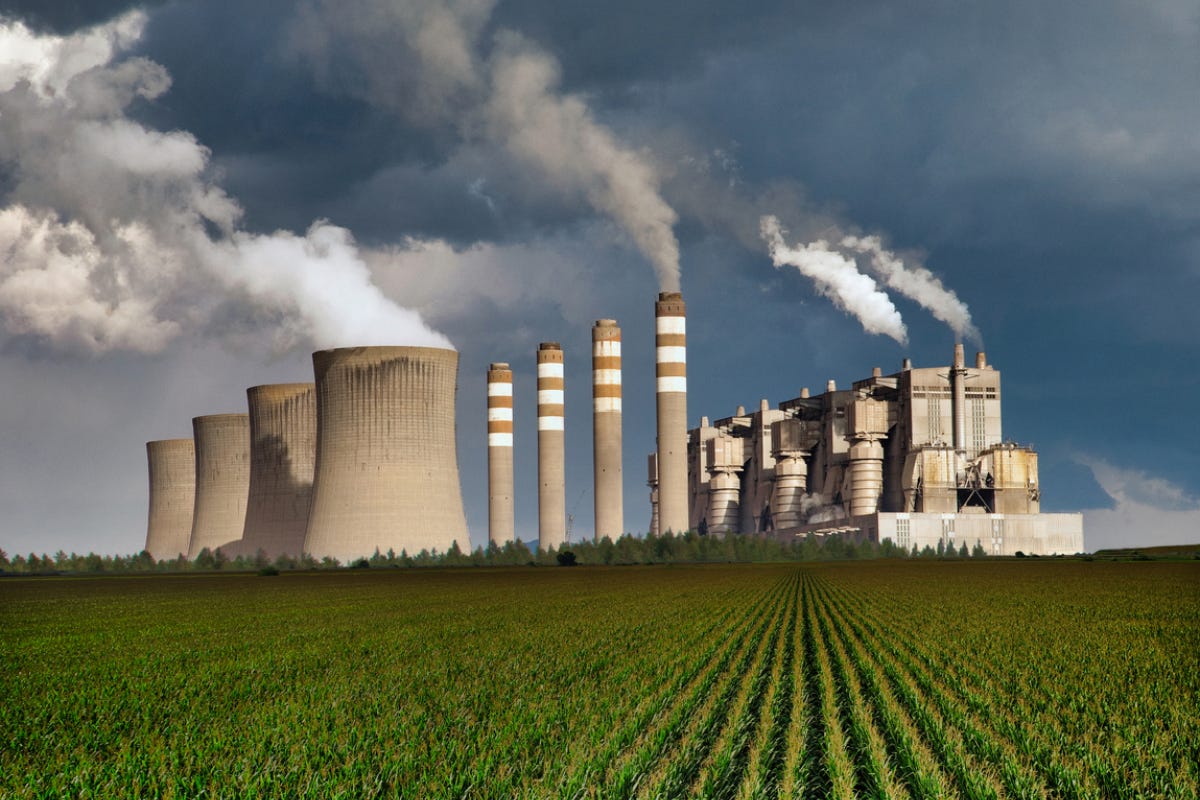
The plan is expected to draw on Cold War-era authorities under the 1950 Defense Production Act. Trump is also set to announce that the Department of Energy will distribute $175 million for upgrades at six coal plants in Kentucky, North Carolina, Ohio, Virginia and West Virginia. Coal executives, miners and energy industry leaders are due at the White House as the announcements are made.
The steps represent the latest effort to revive a flagging coal sector and promote domestic reliance on the fossil fuel.
Sources: Reuters, Bloomberg

President Donald Trump plans to formalise on Thursday the rescission of the 2009 endangerment finding that determined carbon dioxide endangers human health, the White House said. Press secretary Karoline Leavitt said Trump will be joined by Environmental Protection Agency administrator Lee Zeldin, calling it the largest deregulatory action in US history. The finding serves as the legal basis for federal greenhouse gas rules.
Its repeal is expected to lead to the rollback of vehicle emissions standards. The EPA has previously proposed removing greenhouse gas emissions standards for motor vehicles, and the White House said the move would reduce costs for automakers by $2,400 per vehicle. Biden-era rules aimed to cut passenger vehicle tailpipe emissions by nearly 50% by 2032 compared with 2027 projected levels.
The endangerment finding underpins broader climate regulations, and its reversal is likely to face court challenges.
Sources: Reuters, NBC
A newly released FBI document records a 2019 interview with Michael Reiter, the former Palm Beach police chief, who said President Donald Trump called in July 2006 after police began investigating Jeffrey Epstein. Reiter said Trump was one of the “very first people to call” when he heard they were investigating Epstein.
Reiter said Trump told him, “Thank goodness you’re stopping him, everyone has known he’s been doing this,” and urged investigators to focus on Ghislaine Maxwell, saying “She is evil”. Reiter also said Trump recalled being around Epstein when teenagers were present and that he “got the hell out of there”.
The Justice Department said it was not aware of corroborating evidence that Trump contacted law enforcement 20 years ago. White House press secretary Karoline Leavitt said the call “may or may not have happened”, and said Trump has always said he kicked Epstein out of Mar-a-Lago “because Jeffrey Epstein was a creep”.
Sources: New York Times, BBC

Emmanuel Macron said the European Union needs to get tougher with President Donald Trump, warning the US will “attack” Europe over digital regulation and could impose new tariffs. He said a clash could come this year over rules on digital services and that Spain and France may be targeted over proposed social media bans for children.
Macron, speaking ahead of an EU meeting of heads of state on 12 February, said Washington’s “threats” and “intimidation” were not over. He described a “Greenland moment”, citing Trump’s threat last month to annex Greenland and impose tariffs before backing down, and said Europe must not “bow down” when there is “blatant aggression”.
He urged “simplifying” and “deepening” the single market and said Europe must invest more in defence, ecological transition technologies, and artificial intelligence and quantum computing. He said the EU needs around €1.2 trillion per year and renewed his call for common borrowing capacity through “future-oriented Eurobonds”.
Sources: Bloomberg, RFI

Indonesia is preparing 5,000 to 8,000 troops for possible deployment to Gaza under US President Donald Trump’s Board of Peace, according to the country’s army chief of staff. Training has begun, with units expected to focus on engineering and medical roles.
The board has a UN Security Council mandate to establish an International Stabilization Force that would help secure border areas and ensure Gaza’s demilitarisation, including the disarmament of Hamas. Indonesia is due at the board’s first meeting in Washington on 19 February, though Jakarta says the timing, location and terms of any deployment are still being negotiated.
Presidential spokesman Prasetyo Hadi said the proposed multinational force could total about 20,000 troops. Indonesia’s defence ministry also denied Israeli media reports that its soldiers would be based between Rafah and Khan Younis.
Sources: Times of Israel, BBC

Ten people, including the suspected shooter, are dead after a woman opened fire at a high school in Tumbler Ridge, British Columbia, police said. Six people were found dead inside the school.
Police said two more people were found dead at a residence believed to be connected to the incident, and another person died on the way to hospital. The suspected shooter was found dead from what appears to be a self-inflicted injury, and police said there was no ongoing threat.

At least two others were hospitalised with serious or life-threatening injuries, and as many as 25 were being treated for non-life-threatening injuries. Police said officers were on the scene within two minutes. A minister called it one of the worst mass shootings in Canada. The community, with a population of around 2,000, was placed under lockdown around 1:20 p.m. after an active shooter alert. Schools will remain closed for the rest of the week.
Sources: CNBC, Global News
On this day ……
On this day 1990, Nelson Mandela was released from prison after 27 years of incarceration under South Africa’s apartheid regime.
His release followed months of political change and signalled the beginning of formal negotiations to dismantle institutionalised racial segregation.
Mandela emerged not as a symbol of vengeance, but as an advocate for reconciliation and political inclusion, helping steer South Africa toward multiracial elections and constitutional reform.
The moment reshaped the country’s future and altered global perceptions of how deeply divided societies might transition without civil war or mass retribution.
Few political releases have carried such global consequence.