


Hormuz Doubts Send Oil Higher and Stocks Lower (Markets)
Netanyahu Rejects Gaza Plan as Trump Plays Down Rift (Middle East)
Iran Threat Prompted Secret Trump Flight From Turkey (US)
Turkey Creates Legal Path for PKK Disbandment (Middle East)
Russia Accelerates Starlink Rival (Technology)
Russia Bars Last Anti-War Party From Election (Russia)
Beijing Braces for Exceptional Rainfall (China)
Colombia Earthquake Kills At Least 132 (South America)
Oman Battles Major Oil Spill From Sanctioned Tanker (Environment)
Trump Moves to Cut Childhood Vaccine Schedule (US)
A succinct daily briefing delivered each weekday to help you stay on top of the stories shaping the world.

Oil prices jumped as confidence in a deal to reopen the Strait of Hormuz faded, renewing concern over both energy costs and inflation. Front-month Brent crude oil rose 4.99% to $87.72 a barrel while US crude gained a similar amount to settle at $82.13 as negotiations again appeared to deteriorate.
US President Donald Trump demanded that Iran pay compensation for people he said it had killed in wars, attacks and protests. Iran had earlier called for Washington to meet conditions including compensation for damage caused since US and Israeli strikes began more than five months ago.
The market response extended beyond oil. The S&P 500 fell as did the Nasdaq with Intel dropping 4.1% after announcing plans to raise $15 billion through a share sale.
Investors are weighing whether prolonged disruption to Hormuz could keep energy prices elevated, intensify inflation concerns and complicate the interest-rate outlook.
Sources: Wall Street Journal, Reuters

Israeli Prime Minister Benjamin Netanyahu has explicitly rejected the US-led Board of Peace’s 15-point Gaza plan, opening a public policy rift with Washington over the sequencing of Hamas disarmament and Israeli troop withdrawals.
Netanyahu said Israel would not withdraw forces until Hamas was “genuinely disarmed”, including heavy and light weaponry. The plan instead envisages a phased process in which Hamas hands over weapons as Israeli troops pull back. US President Donald Trump nevertheless said on Monday that his relationship with Netanyahu remained “very good”.
A Board of Peace official said the roadmap remained operative and that discussions with Israel were continuing. The official said each stage would proceed only after required commitments had been verified on the ground, while envoy Nickolay Mladenov said Israel would withdraw after verified weapons decommissioning. The dispute now leaves implementation dependent on agreement over which side moves first.
Sources: Al Jazeera, CNN

A credible Iranian threat prompted an elaborate deception operation to move US President Donald Trump secretly out of Turkey after last month’s NATO summit. Trump publicly boarded an older Air Force One in Ankara, but was then taken from the aircraft in a catering container and transferred to a military C-32A for the flight to Britain.
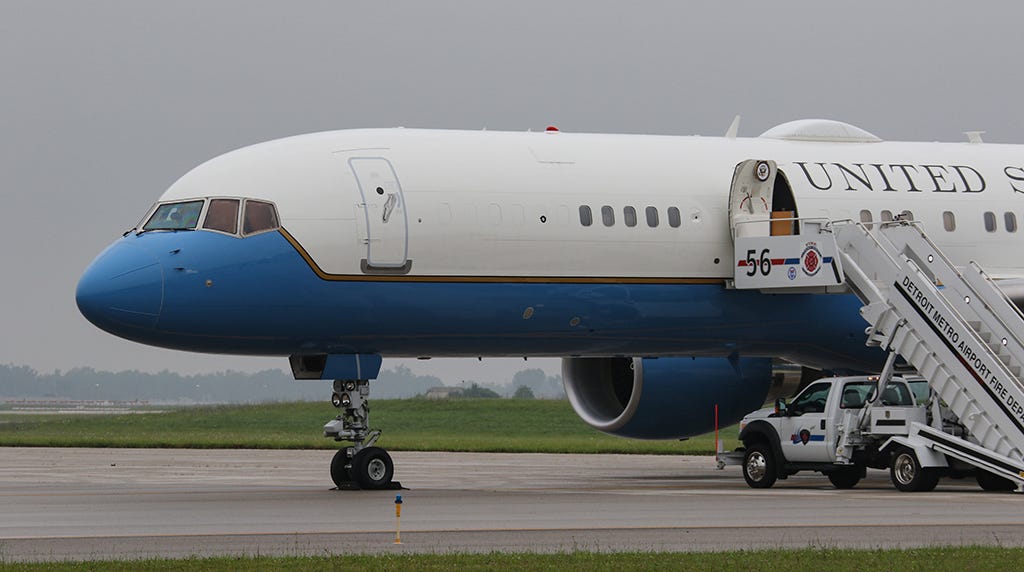
Reporters and some White House staff believed Trump remained aboard the older presidential aircraft, effectively making them unwitting decoys. The plan was developed after officials determined that a threat against Trump and his aircraft from Iran was credible, according to two senior US officials.
Trump was secretly moved back onto the older Air Force One after reaching Britain and later appeared to disembark from it before transferring to the Qatari-donated jet for Washington. White House communications director Steven Cheung said the administration uses every tool available to address threats against the president.
Sources: The Guardian, New York Times

Turkey’s parliament has passed legislation establishing a legal framework for the disbandment of the Kurdistan Workers Party, advancing a peace process aimed at ending a conflict that has killed more than 40,000 people since the PKK launched its insurgency in 1984.
The law provides protections for many former militants who have not committed specific crimes and allows some prison sentences for PKK membership to be suspended. It passed by 468 votes in the 600-seat parliament with support from President Recep Tayyip Erdoğan’s AK Party, its nationalist MHP allies and the pro-Kurdish DEM Party.
The measure follows imprisoned PKK leader Abdullah Öcalan’s 2025 call for the group to disarm and disband. It addresses the reintegration of thousands of members as the group’s structures are dismantled but does not resolve broader Kurdish demands over political and cultural rights, anti-terrorism laws or Öcalan’s status.
Sources: Reuters, FT

Russia is accelerating deployment of its Rassvet satellite communications network with Ukrainian military intelligence saying Moscow is launching the system faster than expected and plans to have 292 satellites in orbit by 2027.
Major General Vadym Skibitskyi, deputy head of Ukraine’s GUR military intelligence service, said Russia currently has 16 Rassvet satellites. Russia launched its first 16 Rassvet satellites into low Earth orbit in March. The system works only intermittently when a satellite passes over Ukrainian territory but he said a full constellation would operate like Starlink. Russia plans to expand the network to 924 satellites by 2035.
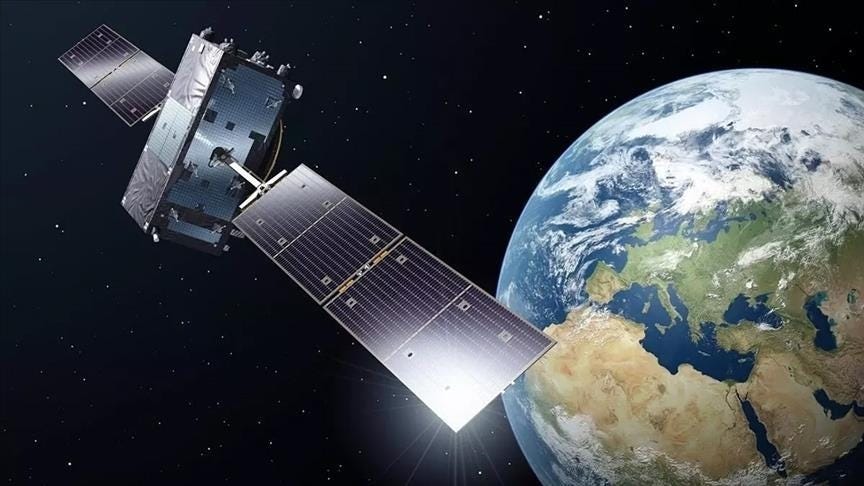
SpaceX’s Starlink has given Ukraine a major advantage in drone operations and battlefield communications, while Russian forces previously used grey-market terminals until Ukraine successfully lobbied SpaceX to disable them. Skibitskyi said discussions are already under way on how to counter Rassvet as Russia expands the constellation.
Sources: Reuters, Kyiv Independent
Restacking this post will help it reach more readers interested in the world.

Russia’s Supreme Court has barred Yabloko, the country’s last registered anti-war party, from next month’s parliamentary election, removing the only party on the ballot that openly opposed the war in Ukraine.
The ruling followed a lawsuit by the pro-Kremlin nationalist Rodina party, which accused Yabloko of foreign funding, copyright violations and promoting extremism. Yabloko denied the allegations. Hundreds of supporters gathered outside the court, while Yabloko chairman Nikolai Rybakov said the party would appeal.
Yabloko has not won Duma seats since 2003, but recent polling reported by Nezavisimaya Gazeta suggested it could secure 9% of the vote. Several prominent members had already been barred from running and authorities in some regions had excluded the party from regional elections.
The Central Election Commission had nevertheless registered Yabloko for the September vote before the court removed it from the ballot.
Sources: Washington Post, BBC

Beijing is preparing for more than one-third of its average annual rainfall to fall within 24 hours as moisture from Typhoon Dolphin converges with cooler air over northern China.
The city’s meteorological service expects most areas to receive more than 150mm of rain in 24 hours from Tuesday evening through Thursday, with some districts potentially exceeding 200mm. Beijing’s average annual rainfall is 528mm, most of it concentrated between June and September.
Authorities in the mountainous western district of Mentougou issued the highest level of flood emergency alert on Tuesday and advised residents to stay indoors unless necessary and avoid mountainous areas and rivers. The warning follows severe disruption elsewhere in eastern China, where Dolphin caused flooding, forced large-scale evacuations and led Shanghai’s airports to cancel hundreds of flights over two consecutive days.
Sources: Reuters, Associated Press

A powerful 7.4-magnitude earthquake has struck western Colombia, killing at least 132 people, injuring more than 480 and leaving others trapped beneath collapsed buildings across several cities.
The quake hit at 07:34 at a depth of 103km, with its epicentre near San José del Palmar in Chocó. Pereira was among the hardest-hit areas, where local authorities reported at least 40 deaths, 65 collapsed buildings and people trapped in 15 of them. Damage was also reported in Cali, Manizales and other parts of western Colombia as rescue efforts continued.
President Abelardo de la Espriella, inaugurated only days earlier, declared a national disaster situation and said more than 1,500 homes had been damaged. Airports in several regional cities reported damage or suspended flights, while tremors were felt in neighbouring Venezuela, Ecuador and Panama.
Sources: BBC, Sydney Morning Herald

Oman is working to contain an oil spill covering about 390 square kilometres off its southern coast after the tanker Caroline Bezengi became stranded near the Hallaniyat Islands, inside a protected marine area.
The vessel, carrying about one million barrels of Russian crude, has been stranded for weeks and is subject to sanctions imposed by the European Union and United Kingdom. The slick is within about seven kilometres of the shoreline and may advance roughly 121 kilometres over the next 48 hours, depending on wind, currents and sea conditions.
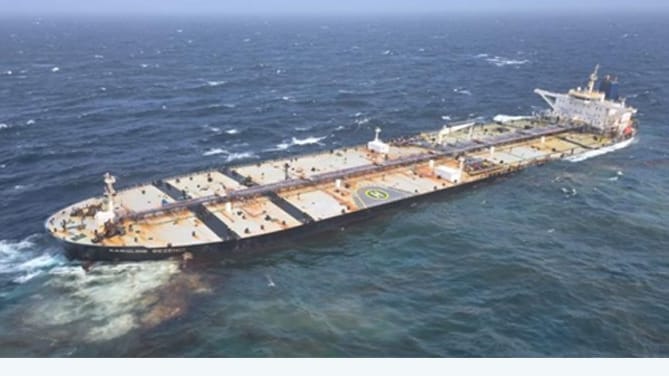
Authorities are using aerial surveillance, diving inspections, satellite imagery and environmental modelling while preparing to transfer the remaining cargo. The spill threatens coral reefs, turtle nesting areas and other marine habitats around the Hallaniyat archipelago, where Oman established a marine reserve last year.
Sources: Al Jazeera, Bloomberg

US President Donald Trump has signed an executive order calling for fewer routine childhood vaccinations, limiting federal recommendations to 11 core immunisations and urging that the measles, mumps and rubella vaccine be split into separate shots.
The order also directs the Justice Department to challenge state vaccination laws and reaffirms changes previously pursued by Health Secretary Robert F. Kennedy Jr., despite ongoing litigation. Existing coverage under the Vaccines for Children programme will continue, according to a senior administration official.
Medical groups and vaccine makers rejected the changes, saying no new science justified them. Dr Aaron Milstone of the American Academy of Pediatrics said conflicting guidance would create confusion and could delay vaccination, while Merck said there is no published evidence that splitting MMR provides a benefit. Republican Senator Bill Cassidy, a physician, also called the executive order wrong.
Sources: Reuters, Associated Press
Restacking or sharing this publication means more people can read it. Commenting extends the conversation. Liking shows your appreciation.
On this day …
On this day in 1919, President Friedrich Ebert signed Germany’s new constitution into law, formally establishing the democratic system that became known as the Weimar Republic.
Written after Germany’s defeat in the First World War and the collapse of the monarchy, the constitution created a federal parliamentary republic with an elected president, universal suffrage and extensive civil rights. Women could vote and hold public office.
Yet the system operated amid political violence, economic instability and deep divisions over Germany’s post-war settlement. Adolf Hitler’s appointment as chancellor in 1933 was followed by the rapid dismantling of its democratic institutions.
How much can constitutional design protect democracy when political commitment to it begins to disappear?