


Iran Raises Stakes With Direct Attacks on U.S. Warships (Conflict)
Saudi-Houthi Fighting Pushes Yemen Toward Wider War (Conflict)
IAEA Refers Iran to UN Security Council (Middle East)
Ukraine Extends Drone Strikes Into Russia’s Arctic (Conflict)
Drone Threatens Zelenskyy Flight From Moldova (Europe)
Netanyahu Threatens Lawsuit Over October 7 Warning (Legal)
Trump Says Iran War May Run Through US Midterms (US)
Silicon Valley Backs Mass-Market Cruise Missile (Technology)
Trump Promises $5,000 Dividend If Republicans Win (Politics)
August Becomes Hottest Month Ever Recorded (Climate)
A succinct daily briefing delivered each weekday to help you stay on top of the stories shaping the world.

Iran has sharply escalated its confrontation with the U.S., launching missiles, including new electro optical missile, at American warships at least three times in the past week as it seeks to break a Strait of Hormuz stalemate that is strangling its economy. U.S. Central Command said the ships evaded the attacks, but officials are increasingly concerned Iran has improved its ability to target moving vessels.
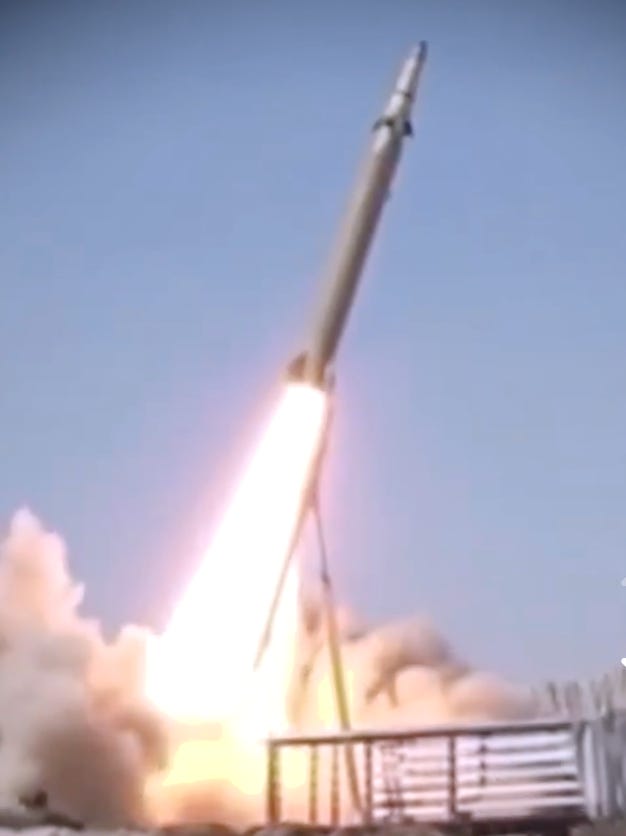
The shift goes beyond Tehran’s earlier attacks on commercial shipping and less sensitive U.S. targets. Iran is using medium-range ballistic missiles capable of manoeuvring towards moving targets, while new U.S. sanctions and a naval blockade have shut down Iranian oil exports and weakened its finances.
A successful strike on a U.S. warship could trigger a fierce American response and reignite full-scale war. Yet maintaining the ability to threaten Hormuz remains central to Iran’s military strategy and bargaining position as economic conditions deteriorate.
Sources: Wall Street Journal, The Telegraph

Renewed fighting between Saudi and Houthi forces is pushing Yemen towards full-scale war, with both sides reporting heavy strikes after weeks of escalating hostilities. The Houthis said Saudi warplanes carried out dozens of attacks across Yemen, while the Saudi-led coalition accused the militia of fresh missile and drone strikes on southern Saudi cities.
The escalation threatens the fragile 2022 ceasefire and carries wider energy consequences. With commercial traffic through the Strait of Hormuz already disrupted by the U.S.-Iran conflict, Saudi Arabia has relied more heavily on Red Sea export routes, which renewed Houthi attacks have also disrupted.
Pakistan has meanwhile warned Iran to rein in the Houthis. Pakistani Defence Minister Khawaja Asif said unprovoked aggression spilling into Saudi Arabia could activate a defence pact with Saudi Arabia and Turkey, raising the possibility that a renewed Yemeni war draws additional regional states into the conflict.
Sources: New York Times, Reuters

The U.N. atomic watchdog has reported Iran to the Security Council for the first time in 20 years, citing failure to cooperate with an investigation into uranium traces found at undeclared sites. Twenty-three of the IAEA board’s 35 members backed the resolution, while Russia, China and Niger opposed it.
The referral opens the possibility of sanctions and asset freezes, although action is considered unlikely because Russia and China hold Security Council vetoes.
Iran’s ambassador to the U.N. in Vienna, Reza Najafi, rejected the resolution as a political tool and said military operations had made access for inspectors impossible.
The IAEA has not been able to inspect sites hit in June 2025 or verify Iran’s near weapons-grade uranium stockpile. The agency says Iran holds 440.9 kilograms of uranium enriched to 60%, which IAEA Director General Rafael Grossi has said could support up to 10 nuclear bombs if Iran chose to weaponise its programme.
Sources: Associated Press, Al Jazeera

Ukraine said it struck two gas condensate processing plants in Russia’s Arctic zone for the first time, with drones travelling more than 3,000 kilometres to targets in the Yamal-Nenets region. Kyiv’s Special Operations Forces described it as the deepest attack inside Russia.
Russian officials had earlier reported an attack on an unspecified energy facility in the region, where falling debris caused a fire. Preliminary data indicated there were no casualties. Yamal-Nenets is one of Russia’s most important natural gas-producing areas and hosts major facilities operated by Gazprom and Novatek, including plants near Novyi Urengoy and in Purov district.
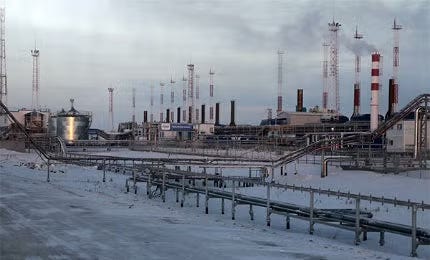
Kyiv has intensified attacks on Russian energy assets, including refineries and export facilities, in an effort to disrupt Moscow’s ability to finance and sustain the war.
The Arctic strikes extend that campaign deep into a region central to Russian gas production.
Sources: Bloomberg, DW

A plane carrying Ukrainian President Volodymyr Zelenskyy was nearly hit by a drone as it prepared to leave Moldova for Norway, according to Norwegian Prime Minister Jonas Gahr Støre. Moldovan authorities temporarily closed the country’s airspace after detecting an aerial target, delaying Zelenskyy’s onward journey.
A senior Ukrainian official travelling with Zelenskyy said they believed the aircraft was threatened by a Russian Shahed-type jet-powered drone. Moldova said a Russian drone had violated its airspace before exploding near Mihăilenii Vechi, about 160 kilometres from Chișinău airport. The Kremlin did not immediately comment.
The incident highlights growing risks to neighbouring countries and civilian aviation as drones and missiles increasingly cross into EU and NATO airspace during Russian attacks on Ukraine. Moldova says more than 30 drones have violated its airspace this year, including 17 in August alone.
Sources: Washington Post, FT

Prime Minister Benjamin Netanyahu said he would sue the newspaper Haaretz over a report claiming United Arab Emirates President Mohammed bin Zayed warned him days before the October 7, 2023 attack that Hamas was planning major action against Israel. Netanyahu denied that any such call took place and said his office found no record of it.
Haaretz said bin Zayed warned Netanyahu during a 45-minute call in late September that Hamas leader Yahya Sinwar was planning action that could cause bloodshed and unsettle the region. An Emirati source familiar with the conversation confirmed the report to The Times of Israel, while former prime minister Naftali Bennett said it was true.
Haaretz said it stood by its reporting. Netanyahu called the report politically motivated, ordered his lawyers to sue the newspaper and reporter Shlomi Eldar, and backed a Likud call for a criminal investigation.
Sources: Times of Israel, Al Jazeera

U.S. President Donald Trump said he expects the war with Iran to end immediately after November’s midterm elections because Tehran “can’t hold out any longer,” while also linking the conflict to elevated oil prices. The war is now in its seventh month, despite Trump initially predicting it would last only weeks.
Iran, however, is signalling that it is prepared for a longer fight. A senior Iranian official said Tehran would escalate counterstrikes if U.S. attacks continue, while the country has rebuilt military capabilities and retains enough missiles for a lengthy conflict.
The widening gap between the two positions comes as Brent crude rises above $100 a barrel and U.S. diesel prices reach record levels. Iran’s economy is also under severe strain, with inflation near 90% but its leaders view the war as an existential threat and say they have little choice but to keep fighting.
Sources: BBC, Japan Times

Silicon Valley-backed defence startup Covenant has unveiled Anthem, a long-range cruise missile designed for rapid, low-cost mass production as the U.S. and its allies seek to replenish missile stocks depleted by the war in Iran. The ground-launched weapon carries a payload of more than 200 kilograms and is intended for high-volume deployment.
Covenant President Abby Denburg said the system was designed for conflict with China, while military planners envisage ground-launched weapons deployed from allied islands such as the Philippines. The company is targeting a mid-six-figure unit price at full production and has booked about $150 million in orders.
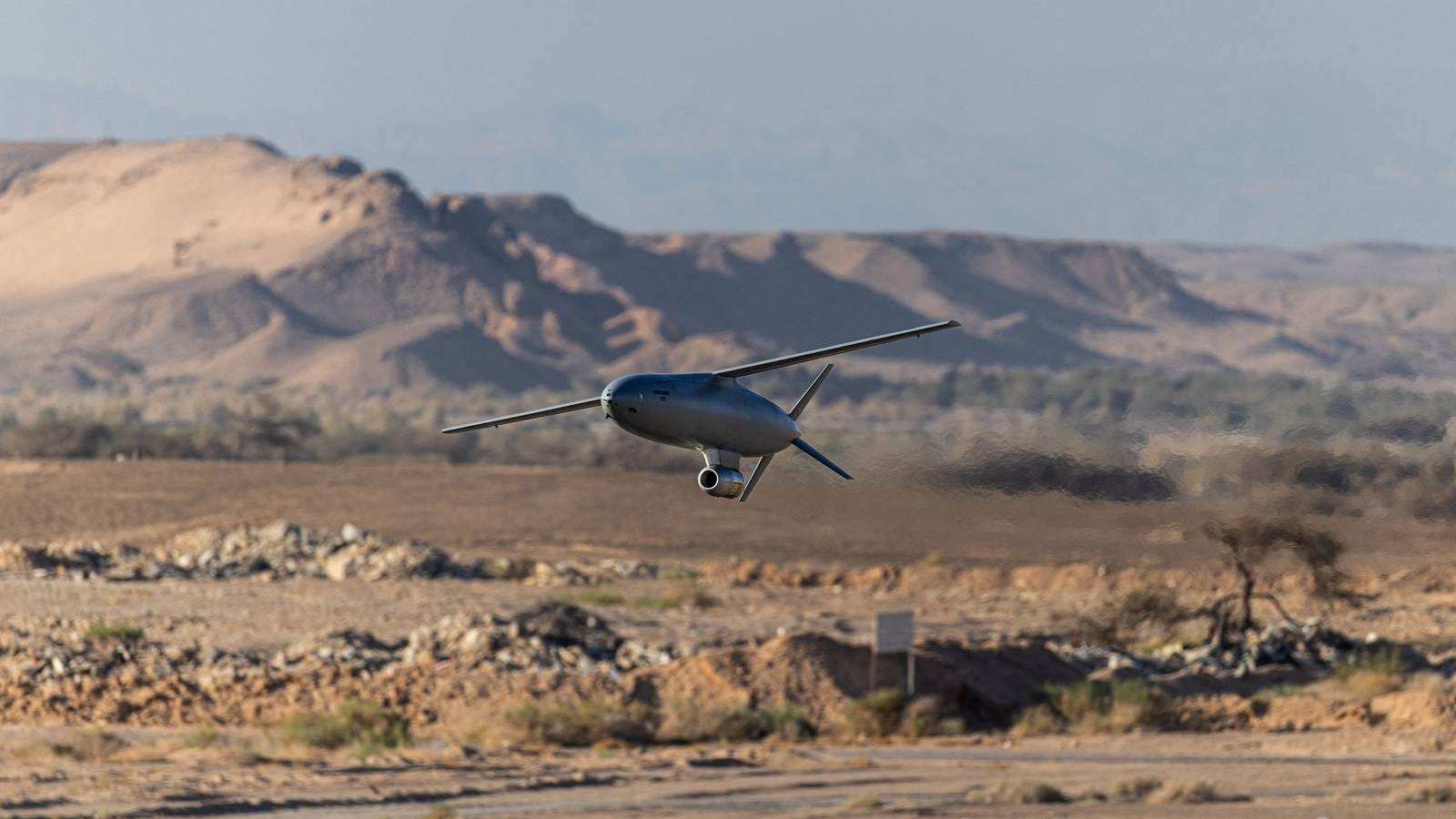
Covenant says its Dallas and Saxony plants will each be capable of producing 5,000 missiles annually, with a smaller Israeli facility adding 2,000. U.S. Army deliveries are expected in 2027, while an international customer is due to receive German-built missiles by year-end.
Sources: Independent, Reuters

U.S. President Donald Trump said every American adult would receive a $5,000 “Trump Dividend” if Republicans retain control of Congress in November’s midterm elections. Trump announced the proposal at the Republican Party’s convention in Dallas but provided no details on how the payments would work.
With roughly 270 million U.S. adults, the plan would cost about $1.35 trillion. Congress would need to approve the payments. Vice President JD Vance later suggested they might exclude wealthy Americans and could be funded by tariff revenues.
The proposal comes as Republicans face the possibility of losing Congress. Trump has tied himself closely to the campaign, asking voters to “pretend that I’m on the ballot” despite public polls showing his approval ratings at an all-time low and dissatisfaction over both the cost of living and the war in Iran.
Sources: Reuters, Associated Press

Earth recorded its hottest month on record in August, with global average temperatures reaching 16.96 degrees Celsius, according to the Copernicus Climate Change Service. The month was 1.65 degrees above pre-industrial levels and effectively tied the previous monthly record set in July 2023 by a margin within measurement uncertainty.
Copernicus said global ocean temperatures also tied an all-time monthly record, while August 22 set a new daily high for the world’s seas. The Northern Hemisphere summer was the hottest measured and the contiguous United States also recorded its hottest summer, exceeding the 1936 Dust Bowl benchmark.
Scientists said human-caused climate change remains the dominant driver, with El Nino adding further warming. Copernicus strategic climate lead Samantha Burgess said El Nino typically contributes only one or two tenths of a degree Celsius, while fossil-fuel emissions account for the overwhelming remainder.
Sources: Arab News, South China Morning Post
Restacking or sharing this publication means more people can read it. Commenting extends the conversation. Liking shows your appreciation.
On this day …
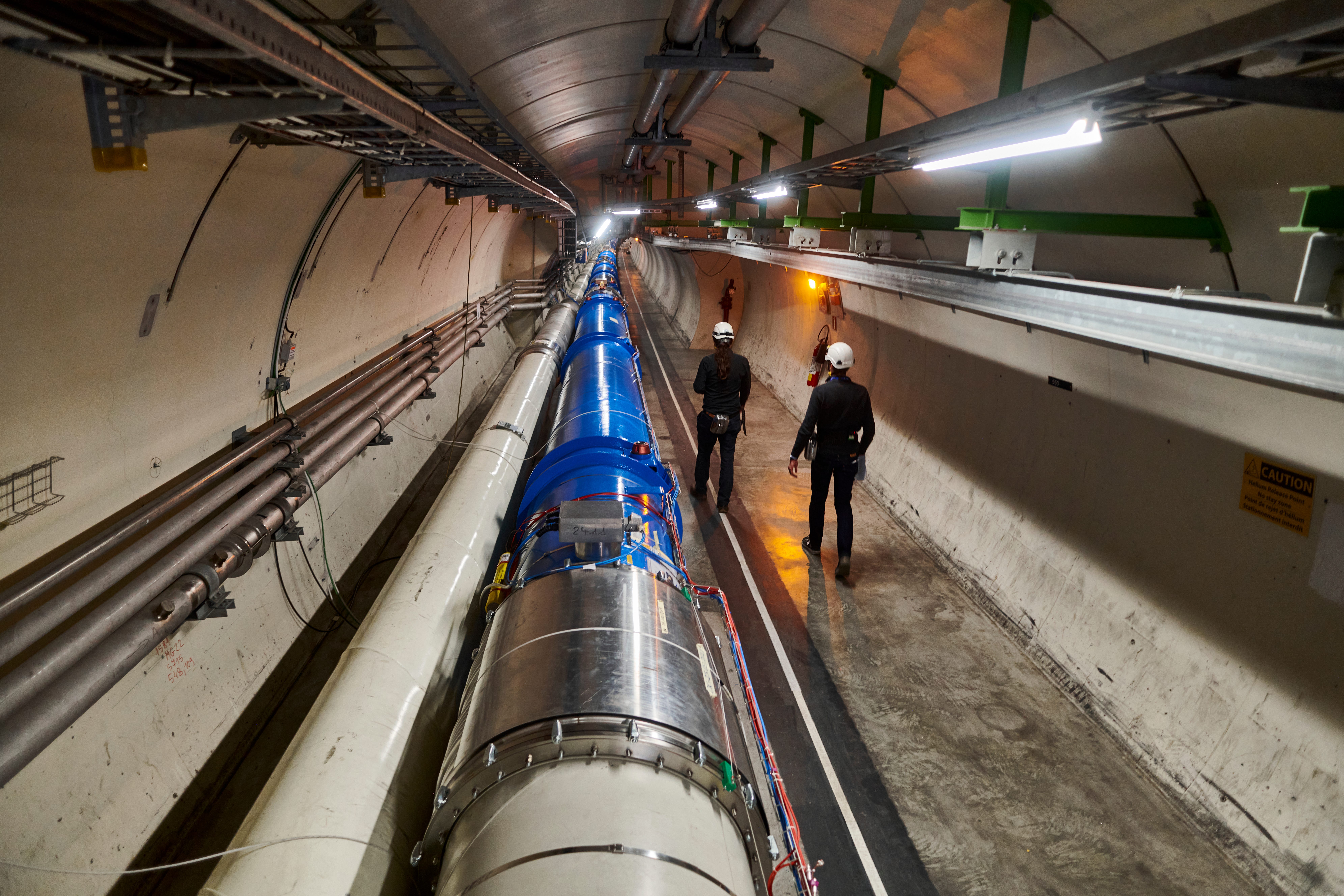
On this day in 2008, scientists at CERN successfully circulated the first proton beam around the 27-kilometre Large Hadron Collider (LHC) beneath the French-Swiss border.
Built through an international scientific collaboration involving thousands of researchers, the LHC was designed to recreate conditions resembling those immediately after the Big Bang and test fundamental theories about matter and the universe.
Four years later, experiments at the collider produced evidence confirming the existence of the Higgs boson a particle only previously theorised to exist.
The project became both the world’s most powerful particle accelerator and a striking example of what international scientific collaboration can achieve at extraordinary scale.