


Israel Warns Iran Strikes Could Resume (Middle East)
Venezuela Quake Crisis Turns Health Emergency (South America)
Qatar LNG Pause Tightens Hormuz Energy Risk (Middle East)
Burnham Near Certain To Become Prime Minister (UK)
NATO Relief Summit Leaves Deeper Strain Intact (Geopolitics)
Putin Digs In As Ukraine War Risks Wider Escalation (Russia)
Spain Wildfire Turns Europe Heat Into Deadly Crisis (Europe)
El Nino Surge Raises Risk Of Global Weather Shocks (Climate)
Aid Driver Killing Threatens Gaza Supply Route (Middle East)
China Flooding Adds Snake Escape Risk (China)
A succinct daily briefing delivered each weekday to help you stay on top of the stories shaping the world.

Israel’s Defence Minister Israel Katz said on Thursday that Israel was prepared to resume its military campaign against Iran and would do so with “even greater force” if necessary, as renewed fighting between the United States and Iran raised fears of a return to full-scale war after an April ceasefire and a June U.S.-Iran agreement to end hostilities.
At a military ceremony, Prime Minister Benjamin Netanyahu said Iran had been weakened by two previous Israeli campaigns but that the conflict was not yet over. Iranian armed forces launched attacks on U.S. military infrastructure in Gulf states after U.S. strikes on Iran’s southern coastal and eastern provinces, further eroding a three-week-old ceasefire.
The attacks came as Iran buried Supreme Leader Ayatollah Ali Khamenei in Mashhad, while U.S. President Donald Trump had declared the truce “over” after attacks on Qatari and Saudi shipping vessels earlier this week.
Sources: Reuters, Al Arabiya

Powerful earthquakes that struck Venezuela last month are giving way to a wider health emergency as displaced residents and unaffected neighbours crowd relief services in the worst-hit areas. Doctors in La Guaira reported rising diarrheal disease and skin conditions, alongside growing demand for medicines for chronic illnesses.
The United Nations has appealed for roughly $300 million to help 1.3 million people, while the International Rescue Committee said 38 hospitals were damaged.
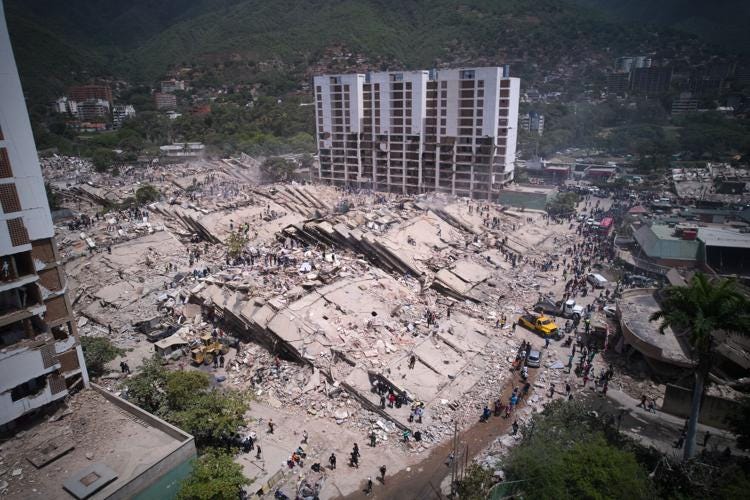
The pressure reflects both earthquake losses and a system already under strain. Venezuelan officials said 190 buildings collapsed, 856 were damaged and about 18,000 people were left without homes after quakes that killed 3,889 people. U.N. relief chief Tom Fletcher said patients are now arriving not only with fractures but with longer-term needs, and Pan-American Health Organization representative Armando Denegri said 50% of health professionals in La Guaira were directly affected.
Sources: Associated Press, CBS News

Qatar has paused efforts to ramp up production at the Ras Laffan liquefied natural gas complex after an attack on one of its tankers in the Strait of Hormuz reinforced fears that transit through the waterway remains too risky.
According to people familiar with the matter, QatarEnergy Chief Executive Officer Saad Al-Kaabi decided to halt plans to increase output, keep operations at a minimum for safety reasons and reduce the number of vessels scheduled to dock.
The decision threatens to tighten the global gas market further as Asia and Europe compete for spare supply before winter. Asian LNG spot prices are more than 80% above pre-war levels, while European benchmark gas prices rose above €50 a megawatt-hour on Thursday.
The pause came as shipping through Hormuz plunged, with only five vessels tracked crossing on Wednesday compared with roughly 130 daily before the war.
Sources: Bloomberg, Al Jazeera

Andy Burnham is almost certain to become Britain’s next prime minister after 322 of Labour’s 403 MPs nominated him to succeed Sir Keir Starmer as party leader, leaving him one short of the point at which no rival could secure the 81 nominations needed to enter the contest.
Burnham, the only declared candidate after nominations opened on Thursday, said the backing from across the party reflected a shared belief that Britain needs a new approach to politics.

If no other candidate enters, Burnham is expected to be declared Labour leader next week and take office as prime minister on July 20. The swift consolidation of support means the choice is being settled inside the Parliamentary Labour Party rather than through a wider contest, though Dame Siobhain McDonagh said Burnham and his ideas would have been better tested in a leadership race.
Sources: FT, BBC

NATO leaders left Ankara with a measure of relief after U.S. President Donald Trump recommitted to the alliance, endorsed a declaration backing Article 5 and agreed to let Ukraine make Patriot missile interceptors. European leaders welcomed the outcome after months of strain over Greenland, Iran and defence spending, while NATO Secretary General Mark Rutte said the United States remained the alliance’s dominant player.
But the summit did not resolve the deeper uncertainty in transatlantic relations. European officials still expect more volatility in relations with Trump and continue to see major value in keeping the United States inside the alliance because of its military weight.
The gathering also underlined NATO’s growing reliance on higher European defence spending and new military deals to steady the relationship, even as the Pentagon reviews the 80,000-strong U.S. troop presence in Europe and plans for a summit in Albania next year remain on hold.
Sources: Reuters, Atlantic Council
Restacking this post will help it reach more readers interested in the world.

President Vladimir Putin is rejecting calls to negotiate peace with Kyiv and is instead likely to escalate the war in the coming months, according to people close to the Kremlin. The shift comes as Ukrainian drone strikes on Russian oil refineries and ports have strengthened his resolve to keep fighting, while U.S. President Donald Trump has said a resolution is closer than many realise.
The immediate objective remains the remainder of the Donbas region still held by Ukraine. One person familiar with Putin’s thinking said he had dug in his heels and recently rebuked advisers who suggested a compromise ceasefire along current front lines.
Kremlin spokesman Dmitry Peskov said Russia was ready for a peaceful resolution but had enough capability to continue the special military operation. Russian military experts have increasingly discussed escalation, including possible strikes on European targets such as NATO bases in Baltic countries.
Sources: Reuters, IDN

Twelve people were reported killed in a wildfire in Almeria in southern Spain as about 150 firefighters battled a blaze that broke out amid soaring temperatures and orange weather warnings across parts of Andalusia.
The regional government said the deaths occurred in the hamlet of Bedar and that at least six people were injured, while roads were closed, residents were evacuated and about 50 people were housed in a cultural centre.
The fire came as western Europe recorded its hottest June on record and many countries faced a third heatwave this week since May. The average temperature in western Europe reached 20.74C in June, 3.05C above the 1991-2020 average.
The climate monitor said the June heatwave contributed to severe health impacts, including heat-related deaths, and that the heat also exacerbated drought conditions and fuelled wildfires in Spain and southern France.
Sources: The Guardian, RFI

El Nino strengthened over the past month and is now highly likely to rank among the largest events on record when it peaks between October and December. Forecasters put the chance of a very strong event at 81% and said it is likely to persist through early spring 2027, signalling a weather pattern capable of reshaping rainfall, winds and temperatures across multiple regions.
Sea surface temperatures in the Nino 3.4 region are now 1.2C above average, while warming waters below the surface and shifting wind and pressure patterns point to a strengthening event.
El Nino typically brings drier conditions and drought in Australia and wetter winters in East Africa and the southern United States. Combined with human-induced climate change, the last El Nino contributed to 2023 being the second-hottest year on record and 2024 the hottest.
Sources: France 24, Le Monde

A Palestinian driver bringing food aid into Gaza was killed on Wednesday after an aid convoy stopped because one truck broke down soon after entering the territory, according to witnesses and the local truckers’ association.
Ahmad Esleem was shot in the head after Israeli soldiers ordered drivers out of their trucks, and the association said it may suspend operations in protest. It said the convoy had been fully coordinated and had entered through the only crossing point still functioning for aid shipments.
The Israeli military confirmed the shooting but said troops had identified drivers who exited their trucks contrary to established procedures and opened fire after perceiving an immediate threat. The association said it is moving towards closing the crossings and suspending work, warning that continued targeting of drivers threatens the movement of goods. The killing adds to pressure on an aid system in which private truckers are routinely used to move food and essential supplies into Gaza.
Sources: The Guardian, The Palestinian Information Center

Severe flooding in southern China has created a new public safety risk after hundreds of snakes, including cobras, escaped from breeding farms in Hengzhou as storm waters swept through Guangxi. Authorities warned residents after flood waters damaged snake farms, and emergency guidance said venomous snakes had escaped and could seek shelter in homes, stairwells, corners of buildings and along riverbanks.
The snake alerts came amid a much wider disaster. Authorities said 39 people died in flooding after heavy rainfall, with 26 deaths in Hengzhou after the partial collapse of a reservoir dam sent torrents of water into the city.
About 130,000 people have been evacuated, while officials increased anti-venom supplies and opened a fast-track treatment channel for snakebite patients at Hengzhou People’s hospital. Nine people remained missing in the broader Guangxi region.
Sources: NBC News, The Guardian
Restacking or sharing this publication means more people can read it. Commenting extends the conversation. Liking shows your appreciation.
On this day …
On this day in 1940, the Battle of Britain began, opening one of the most significant military campaigns of the Second World War.
Following the fall of France, Nazi Germany launched an air offensive against Britain in an effort to destroy the Royal Air Force and secure control of the skies before a possible invasion.
For months, RAF pilots, supported by radar technology, industrial production and civilian resilience, resisted sustained attacks by the Luftwaffe. Britain’s survival denied Germany air superiority and marked Hitler’s first major military setback of the war.
The Battle of Britain demonstrated that technological innovation, preparation and determination could alter the course of history. Can decisive moments in history sometimes hinge on the resilience of a relatively small number of people?