


10 Good Things is our monthly counterpoint to some of the less uplifting reality that faces us in the daily news cycle
1. Mangroves | Global Forests Rebound
A major 40-year satellite analysis published in the journal Science reveals that global mangrove forests have reached a major conservation turning point.
Long considered one of the world’s most endangered coastal ecosystems due to urban development and aquaculture, the study by Tulane University shows that decades of losses have been largely offset by natural regeneration and proactive restoration.

Thanks to slowing deforestation rates, stricter legal protections, and mangroves opportunistically colonising newly formed river delta mudflats, the critical carbon-storing habitats are now experiencing a net expansion overall.
Sources: Tulane University School of Science and Engineering & Mongabay
2. EV Reducing CO | Urban Air Quality Improvement
The rapid scaling of vehicle electrification is translating into measurable urban air quality milestones.
New vehicular emission inventories modeling urban drive cycles indicate that the structural shift away from internal combustion passenger vehicles has directly accelerated the reduction of ambient carbon monoxide (CO) levels.

Because traditional passenger vehicles historically generated the vast majority of urban transportation sector CO emissions through incomplete fuel combustion, local fleet conversions are successfully curbing localized pollution variance, offering immediate respiratory benefits to major metropolitan centers.
Sources: ResearchGate - Emission Rates Study & ResearchGate - Urban Transportation Impacts
3. Mission 300 | Rapid Electrification Across Africa
“Mission 300,” the joint initiative led by the World Bank Group and the African Development Bank Group, has officially surpassed a major milestone by connecting over 50 million people to electricity across 40 African nations.
Launched to secure power access for 300 million people by 2030, the program is currently delivering grid and off-grid connections at nearly double its initial pace.

Backed by $15 billion in public funding and leveraged private investments, the initiative recently expanded its reach via the $1.6 billion RETRADE-EA regional power integration project, which will soon link Uganda’s surplus clean hydropower to the broader Eastern Africa Power Pool, mitigating millions of tons of carbon emissions.
Sources: The World Bank - Press Release & The World Bank - RETRADE Project
4. Philanthropic Land Purchase | Massive Nature Reserve Created
Australian technology investor Mike Gregg and his wife Sue have donated $10 million to purchase 7,000 hectares (over 17,000 acres) of active logging and cattle-grazing land to establish a permanent wildlife refuge.
Facilitated through the Great Southern Land Conservancy, the acquisition connects six adjoining properties southwest of Port Macquarie in New South Wales.
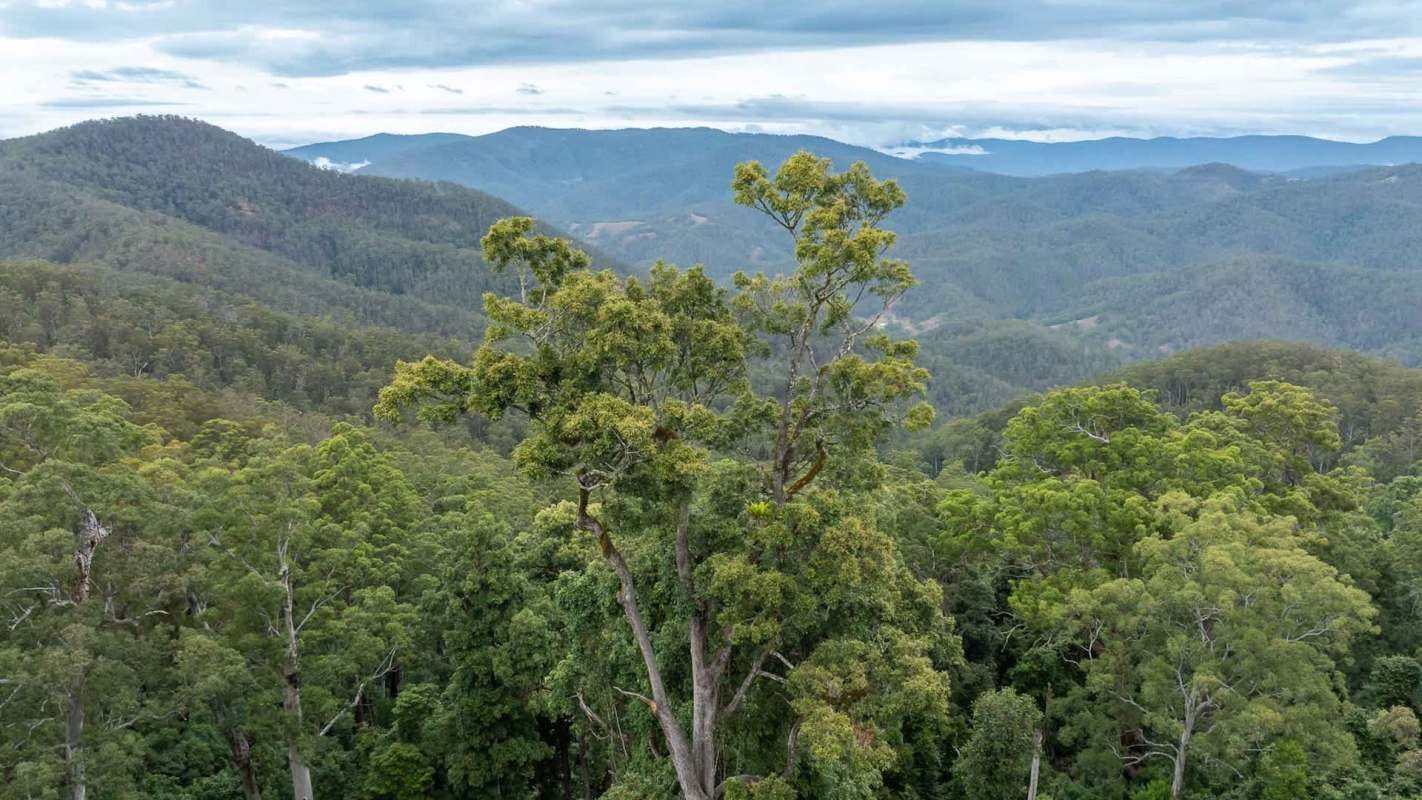
By linking these zones to existing protected areas, the project secures a vital, contiguous habitat corridor for threatened species—including greater gliders, spotted-tail quolls, and what is projected to be the largest koala population on private land in the state.
Sources: The Cooldown & Reddit /r/UpliftingNews
5. Ocean Plastics | Turning Fishing Nets into Pavement
Researchers at Hawaiʻi Pacific University’s Center for Marine Debris Research, in partnership with the Hawaii Department of Transportation, have successfully demonstrated a practical, circular infrastructure solution for marine pollution.
In real-world trials on Oahu, discarded plastic household containers and derelict commercial fishing nets pulled from the Pacific were processed and melted directly into asphalt road binders.

Crucially, the team’s newly published multi-month environmental analysis confirms that these recycled polymer pavements perform just as durably as traditional petroleum-based alternatives without causing any increase in microplastic shedding into the surrounding tropical ecosystem.
Sources: Impactful Ninja & PlasticsToday
Restacking or sharing this publication means more people can read it. Commenting extends the conversation. Liking shows your appreciation.
6. Wild Horses | Ecological Balance Restored in Nevada
The Bureau of Land Management (BLM) has successfully concluded its scheduled wild horse and burro population management operations within the Antelope, Triple B, and Spring Mountains complexes in Nevada.
Utilizing low-stress bait and water trapping methods, teams humanely removed excess animals to align herd sizes with local rangeland carrying capacities.

The targeted reduction mitigates severe forage depletion and protects scarce water resources, supporting critical habitat restoration for native wildlife—including mule deer, pronghorn antelope, and sage grouse - while the gathered horses enter the BLM’s official adoption and long-term pasture programs.
Sources: Bureau of Land Management - Antelope/Triple B & Bureau of Land Management - Spring Mountains
7. Clean Energy Outpaces Subsidies | Market-Driven Green Transition
Global clean energy investment continues to break structural records, increasingly driven by raw market competitiveness rather than government incentives.
According to BloombergNEF’s long-term energy transition modeling, global wind capacity installations hit an all-time high, anchoring a massive surge in private sector capital deployment.

Even as major markets navigate shifting trade tariffs and policy resets regarding federal tax credits, the falling levelized cost of electricity (LCOE) for solar and battery storage systems has made renewable infrastructure the default, economically superior choice for utilities responding to rising electricity demands.
Sources: BloombergNEF - Clean Energy Insights & BloombergNEF - Main Portal
8. Wind and Solar Eclipse Gas | The Clean Energy Acceleration
Electrification trends show renewable power generation fundamentally restructuring the global grid, with wind and solar capacity additions expanding fast enough to affect baseline fossil fuel demand.
Industry data highlights that mature low-carbon technologies have reached a self-sustaining scale, effectively capping the growth of natural gas power generation in core power grids.

Driven by a record-breaking influx of private capital and corporate Power Purchase Agreements (PPAs), the structural acceleration is transforming transport and utility sectors, moving the needle from peak fossil fuel dependency toward a diversified, electrified economy.
Sources: BloombergNEF - Transition Scenarios & BloombergNEF - Electric Vehicle Outlook
9. Biodiversity | Lost Lorikeet Rediscovered After 100 Years
An international scientific expedition into the remote, unexplored highlands of Buru Island, Indonesia, has successfully rediscovered the Blue-fronted Lorikeet (Charmosynopsis toxopei).
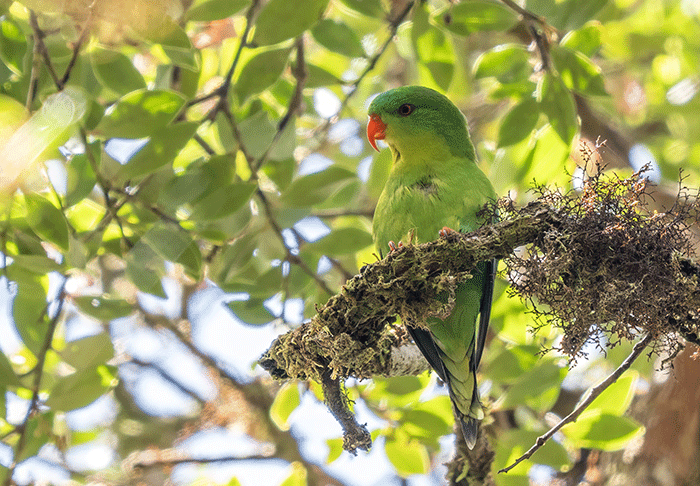
The elusive, bright-green parrot had been documented only once in the last century, leaving conservationists to fear it was extinct. Venturing past sharp limestone ridges and dense tropical forests into elevations above 1,300 meters, the mountaineering and research team secured the first clear photographs and the first-ever audio recordings of the species’ distinct high-pitched calls, proving that a stable population persists within these rugged mountain refuges.
Sources: Artensterben & Rare Bird Alert
10. Nanozymes | Unlocking the Inorganic Origins of Life
A new physicochemical framework published by the Royal Society is reshaping scientific understanding of how biological life first emerged on Earth. Researchers have demonstrated that naturally occurring transition-metal nanostructures—specifically iron oxides and sulfides found in ancient marine environments—function as primitive “nanozymes” (inorganic structures with enzyme-like reactivity).
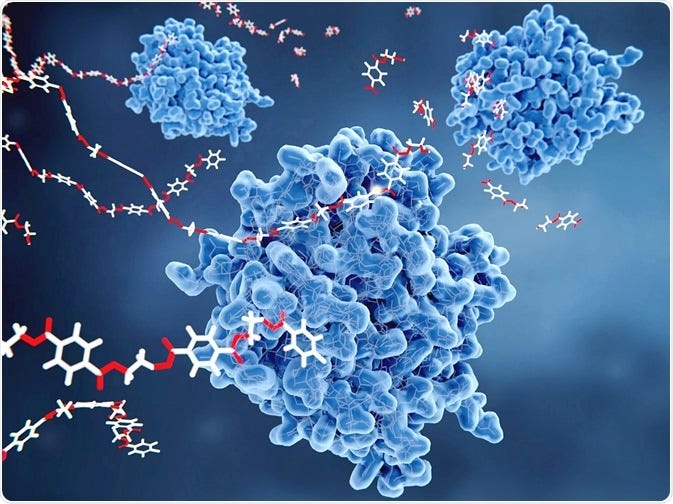
By facilitating complex processes like proton-coupled electron transfers and redox cycling under early-Earth conditions, these nanoscale mineral catalysts drove key chemical transformations long before metabolic biology or genetic regulation evolved, bridging the gap between geology and biology.
Sources: ScienceDaily & ResearchGate - Royal Society Perspective
Restack this post to help it reach more readers interested in the world.
Great post thank you ☺️